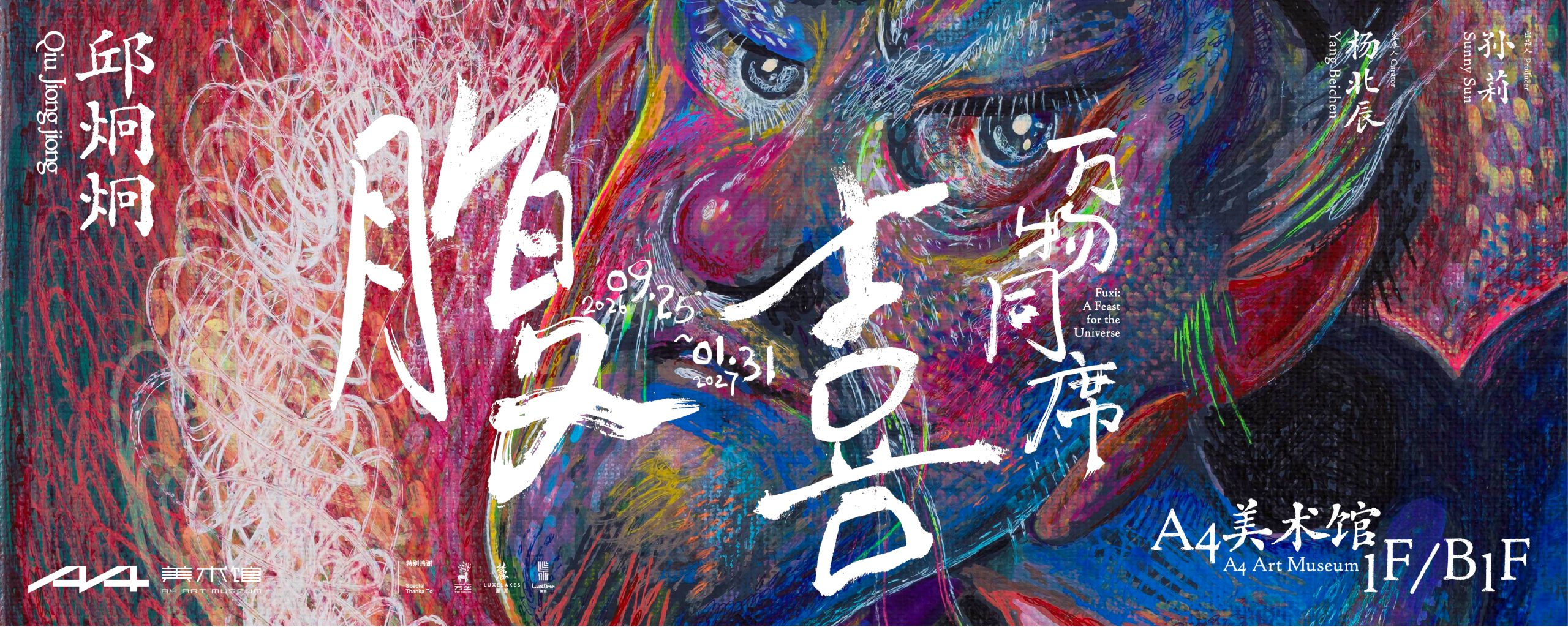
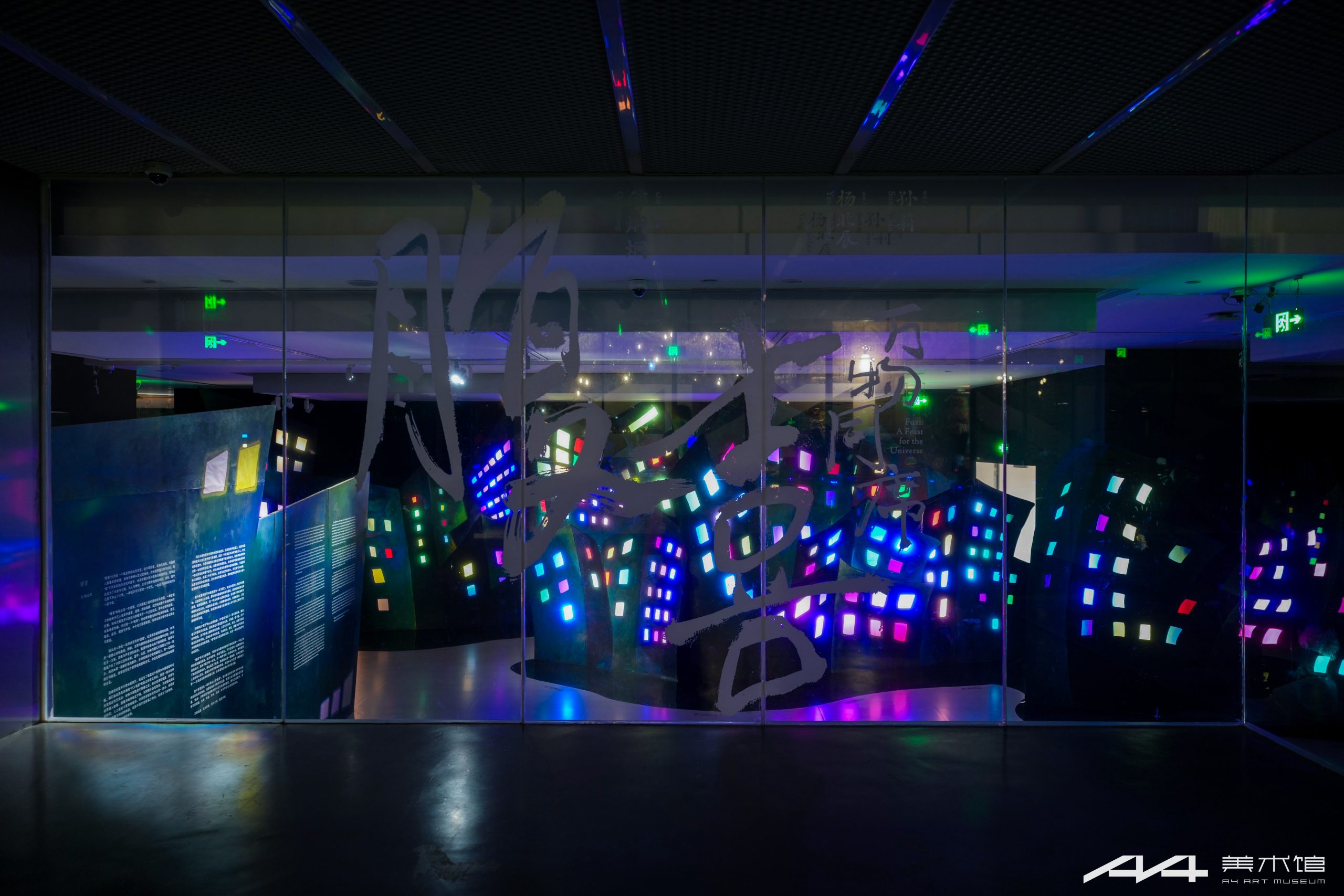
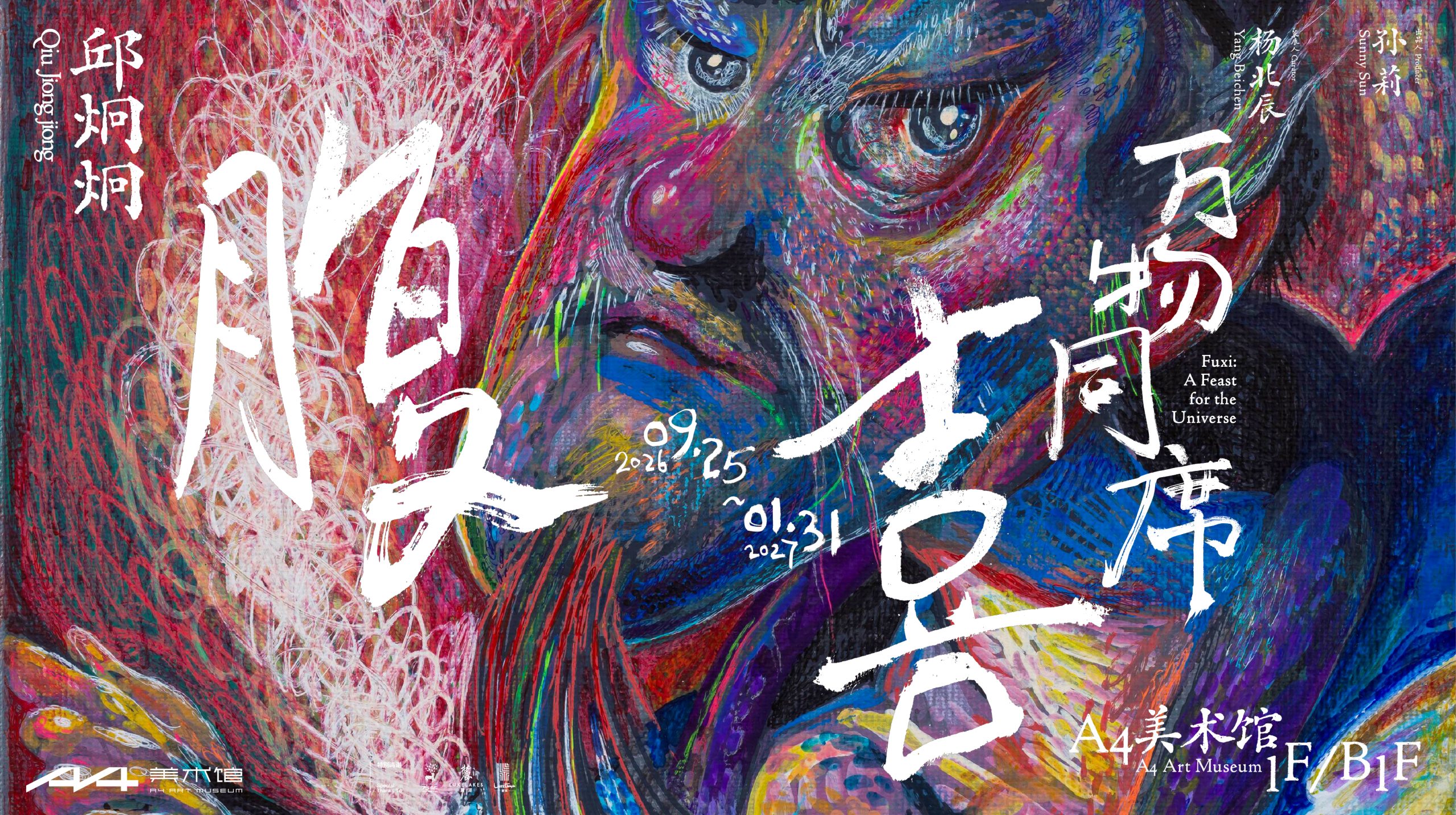
Fuxi is perhaps an invented Sichuan expression. Simple, tangible, and poetic, the word speaks to one of our most elemental desires. Food is bound to the body and to memory; the kitchen hearth links everyday life to history. The fu—the belly—holds and digests, but also harbours homesickness and imagination. The feast thus becomes a meeting place for the living and the dead, mortals and gods, official history and unofficial accounts. The joy of the belly transcends appetite: a single meal can hold an entire era, and a single table can open into a universe.
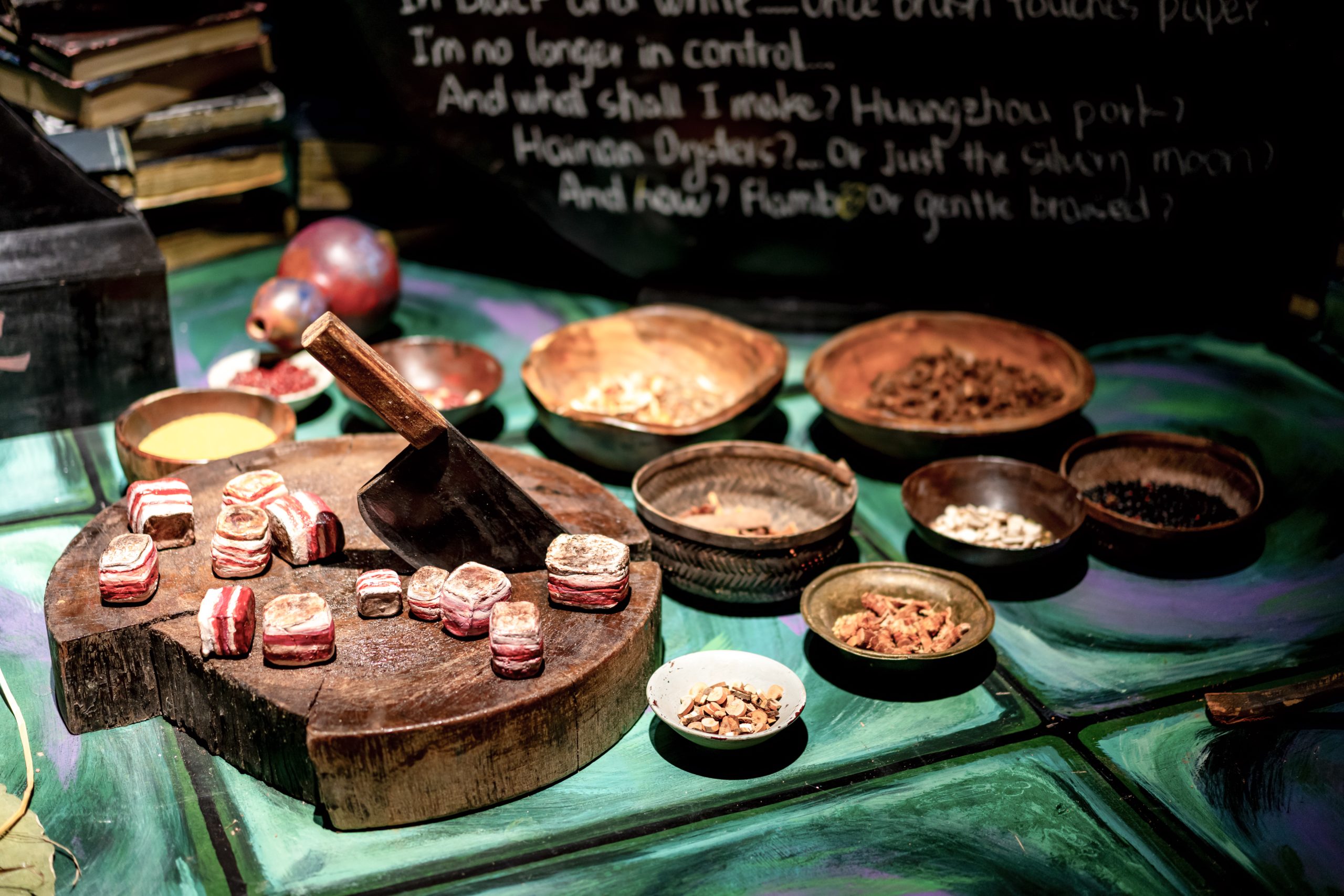
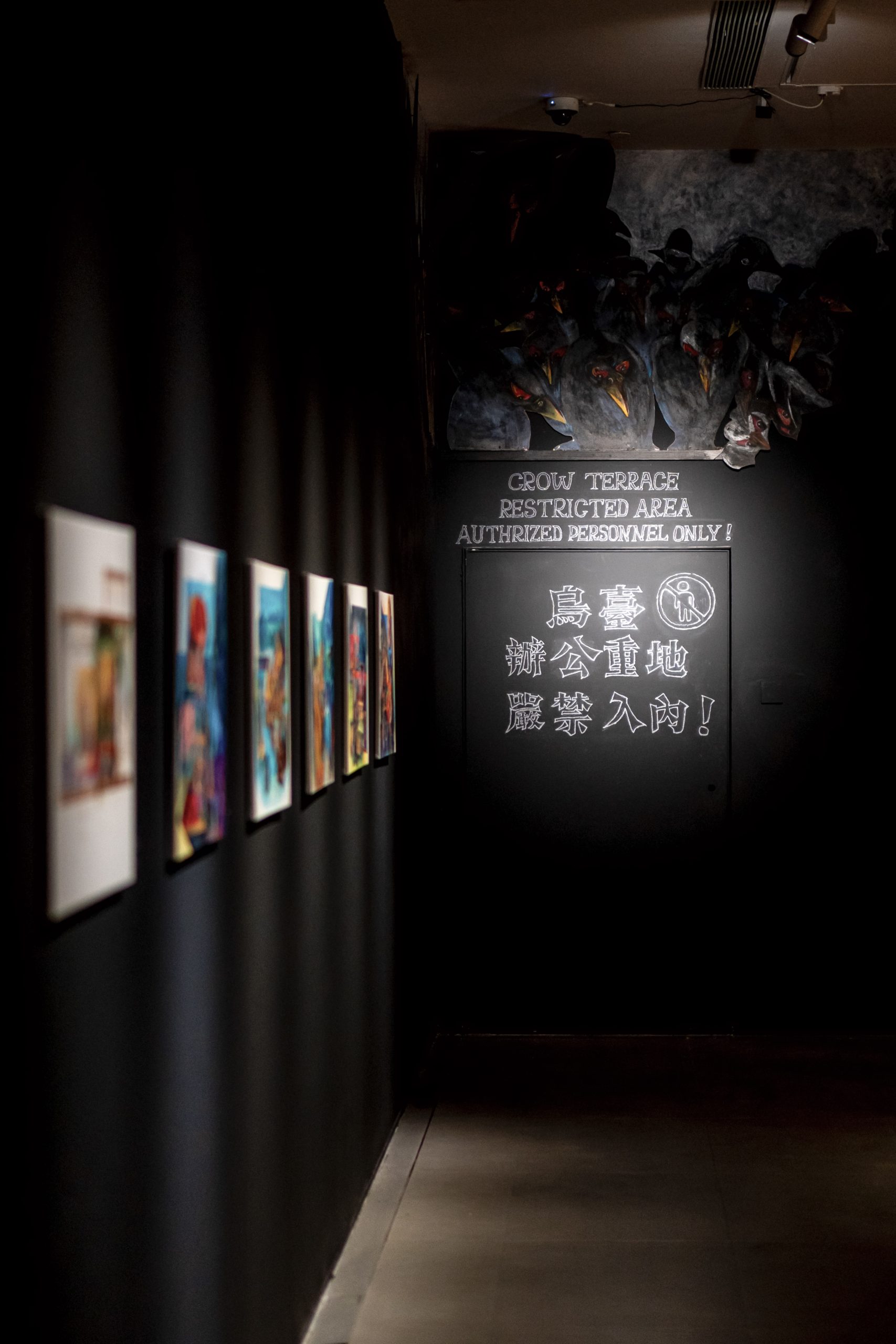
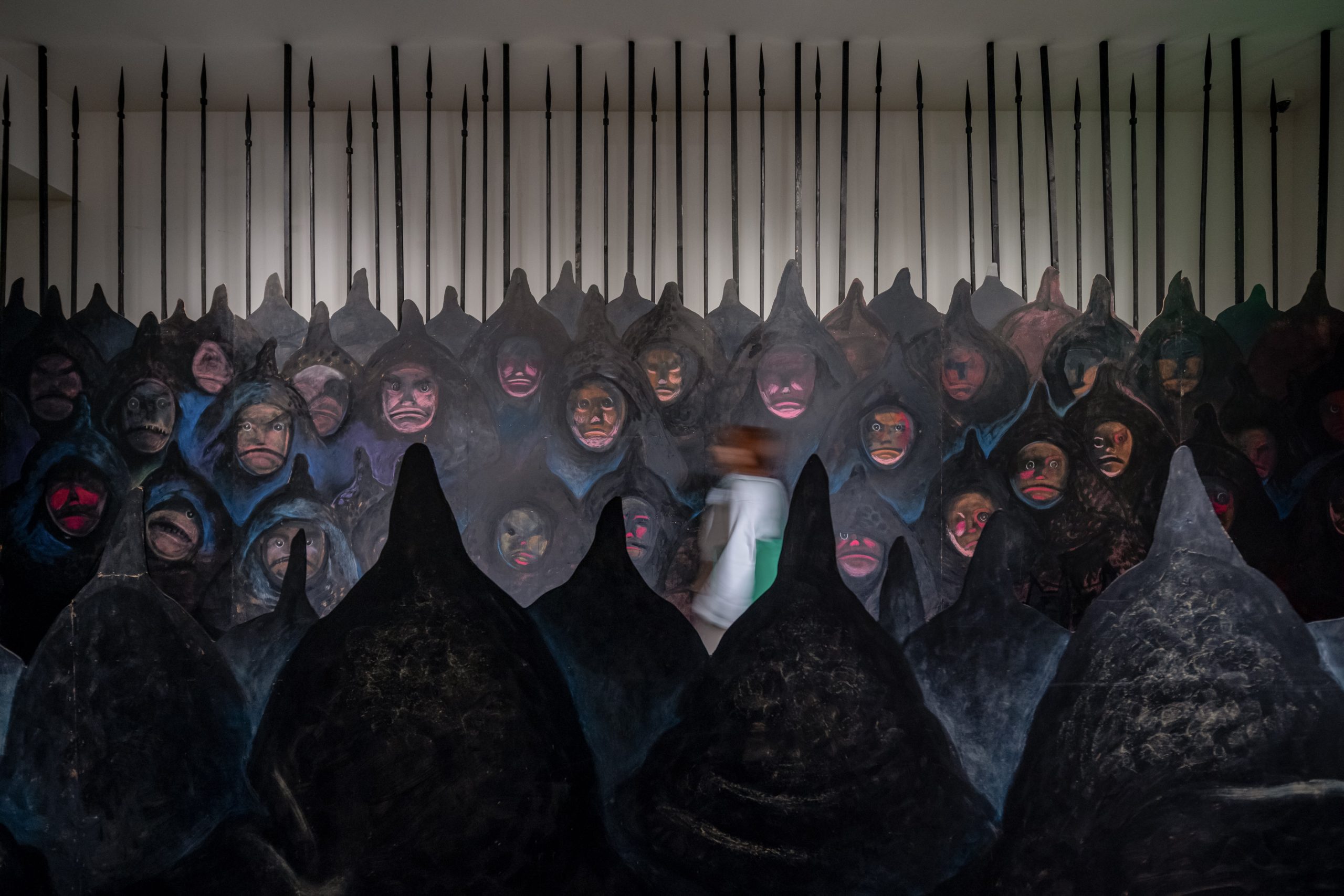
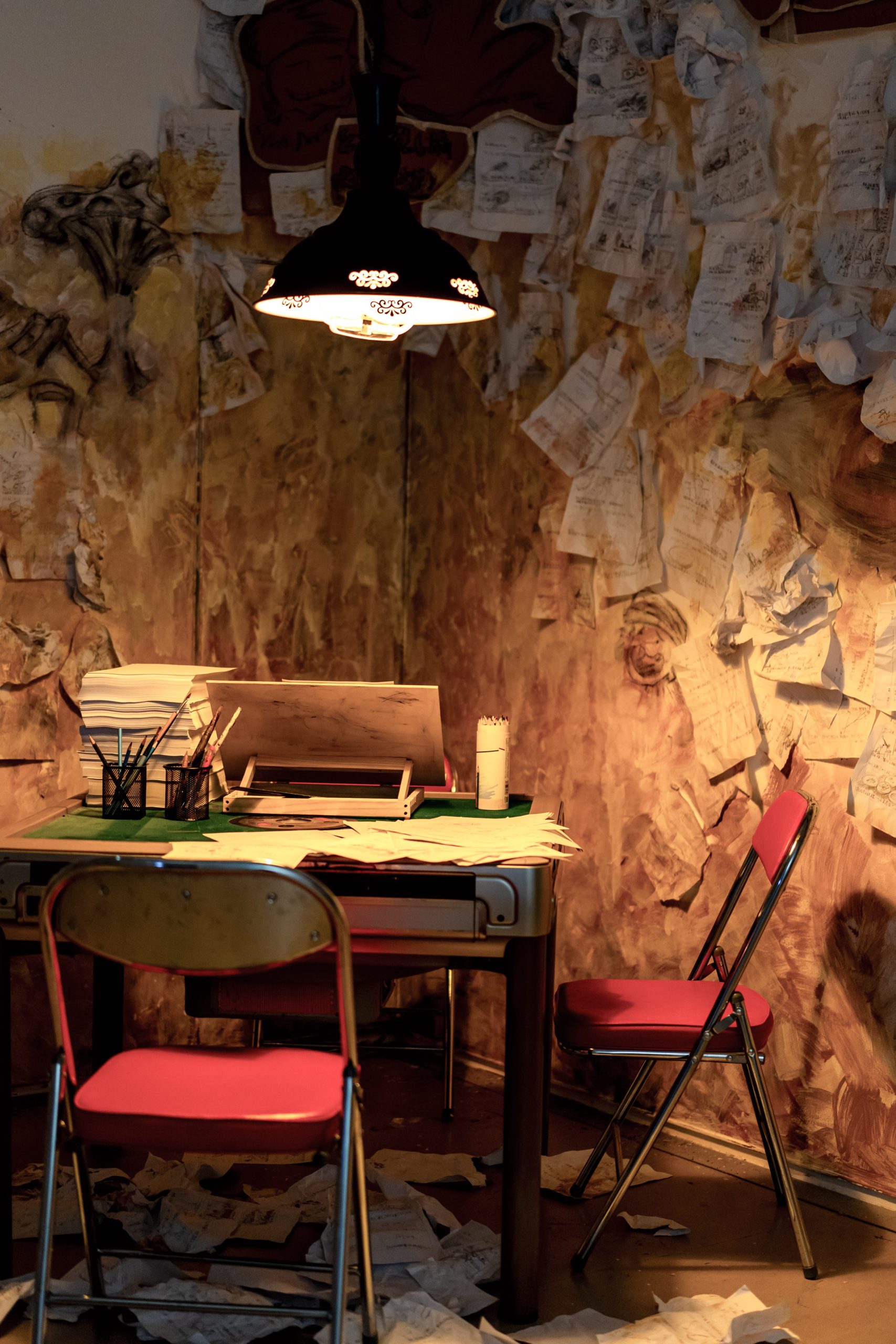
Fuxi began with a ruin and a temporary circus tent pitched upon it. There, a group of artisans, at once solemn and at ease, painted backdrops, crafted objects, and began filming, attempting to summon Sichuan’s past across millennia. Yet this exhibition does not treat the film as a finished work awaiting explanation. Instead, it takes the film apart and returns its elements to a living “site”: the paintings, scenic flats, costumes, props, models, and sounds once orchestrated by the lens have now broken free from the screen, awaiting reassembly within the museum.
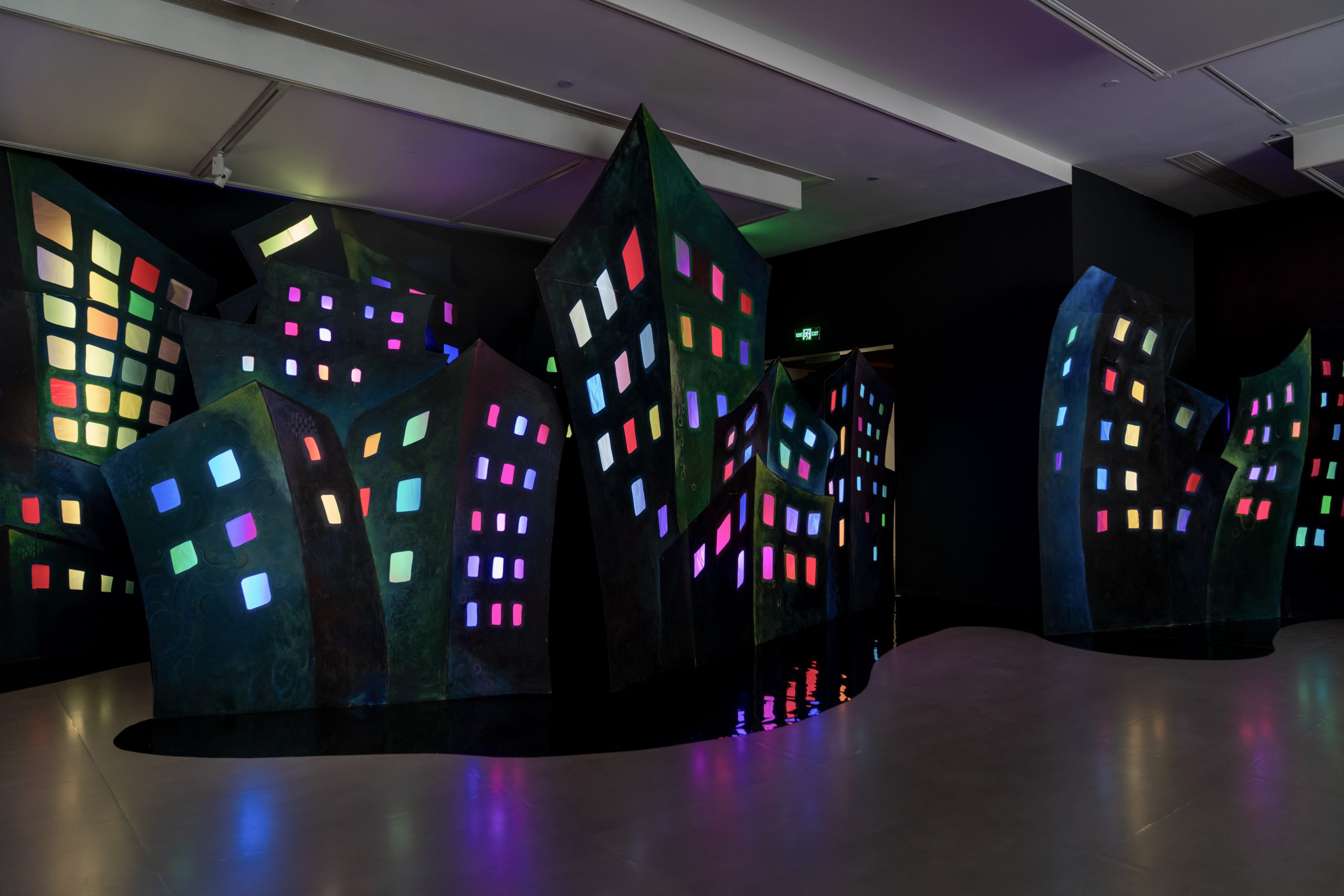
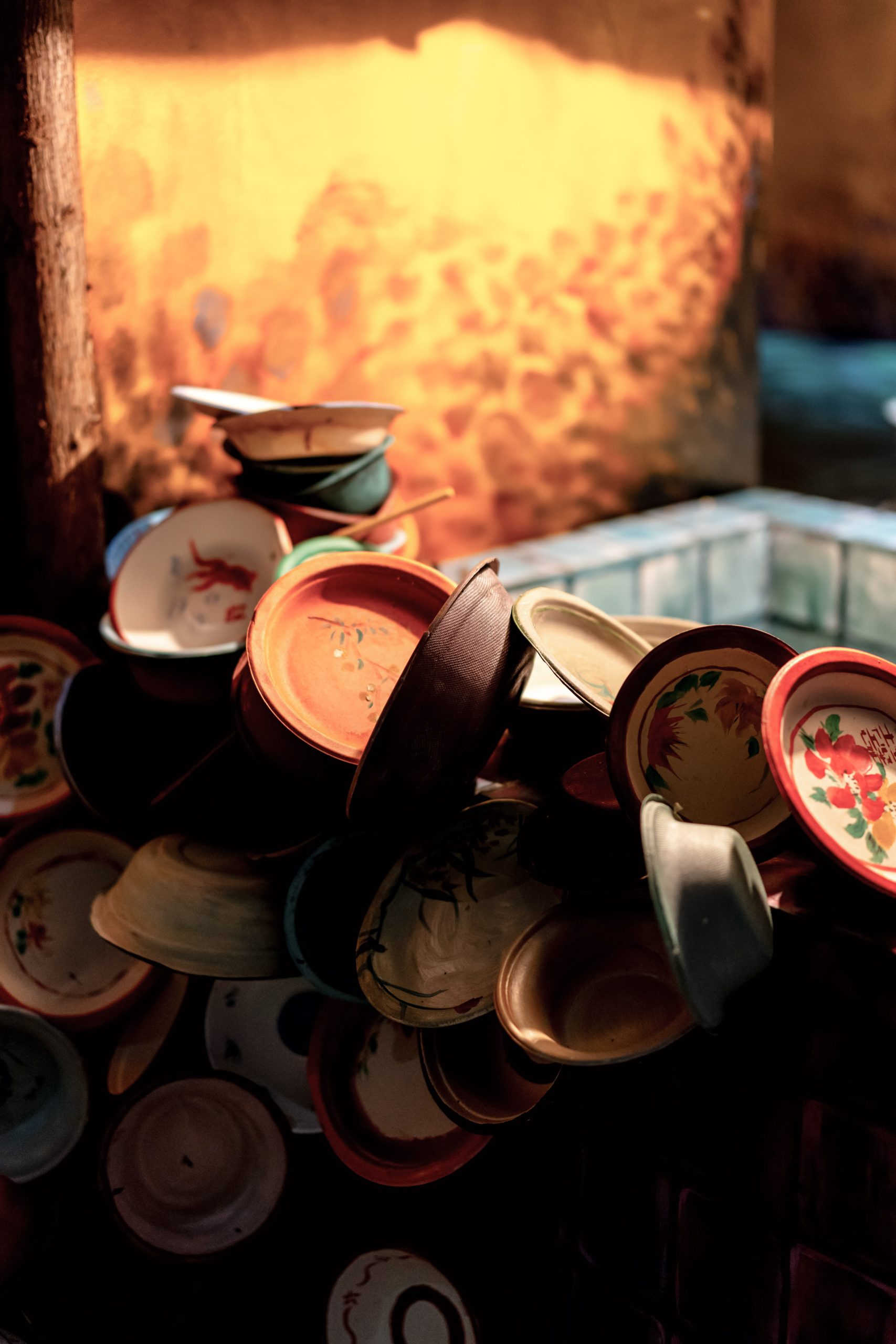
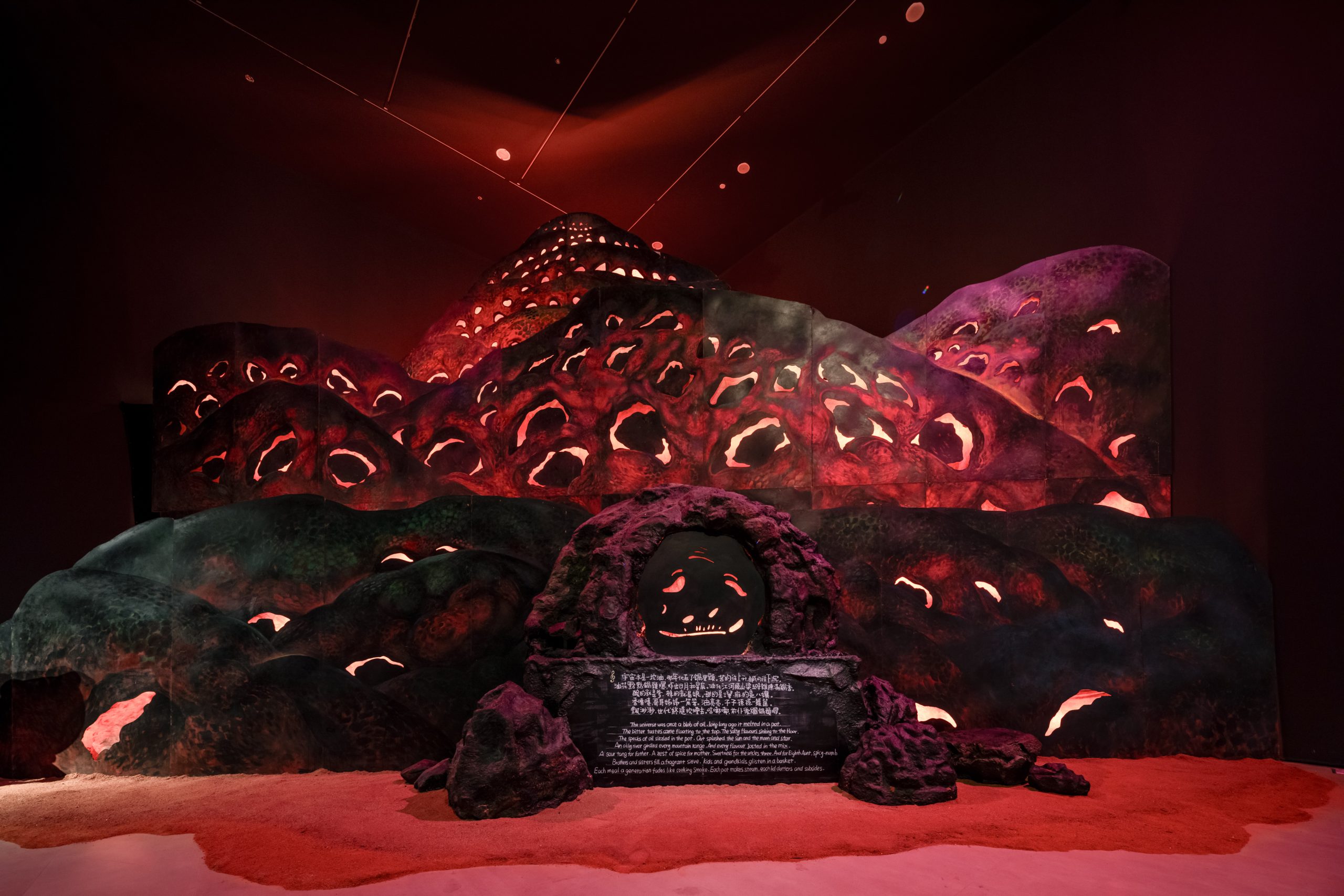
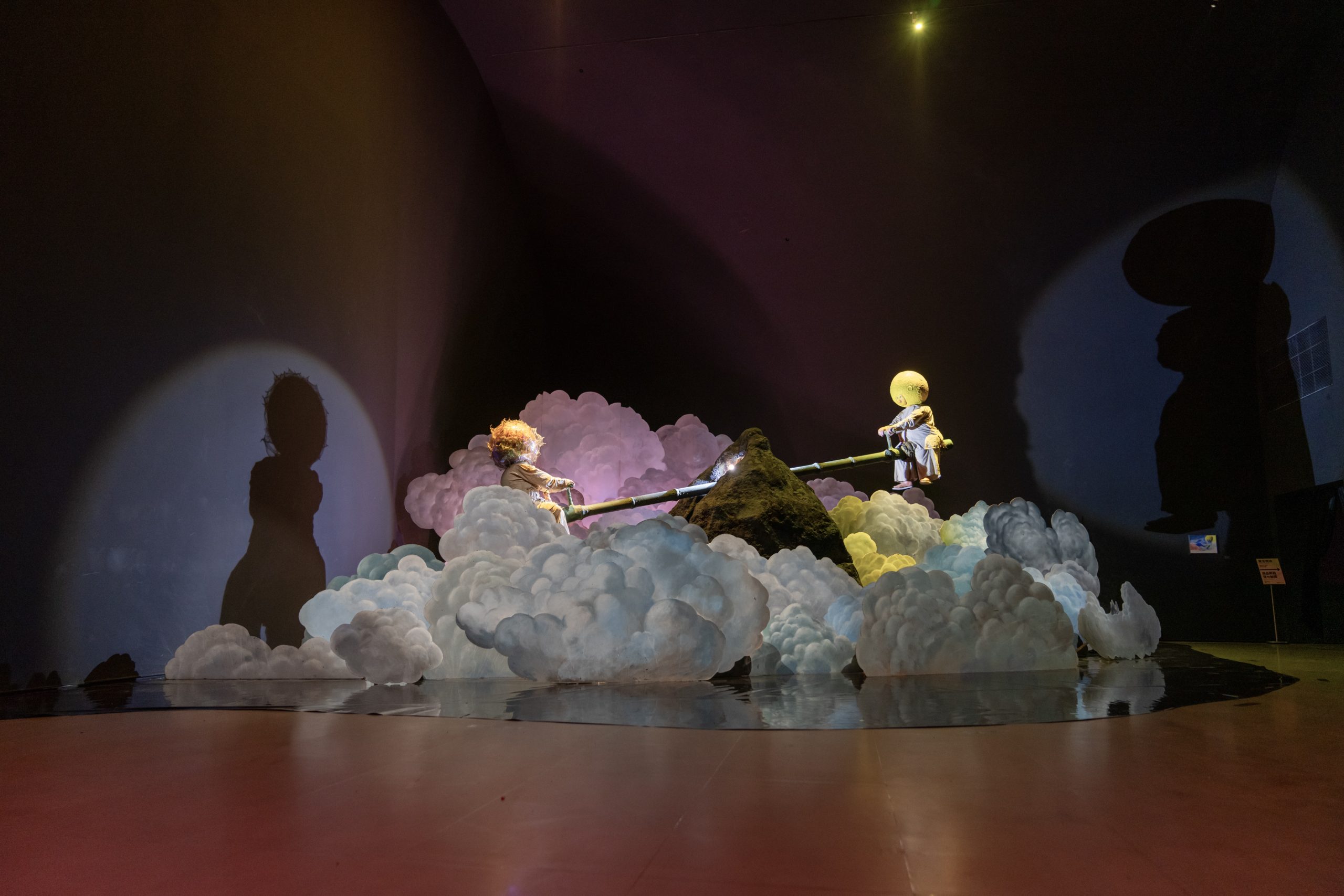
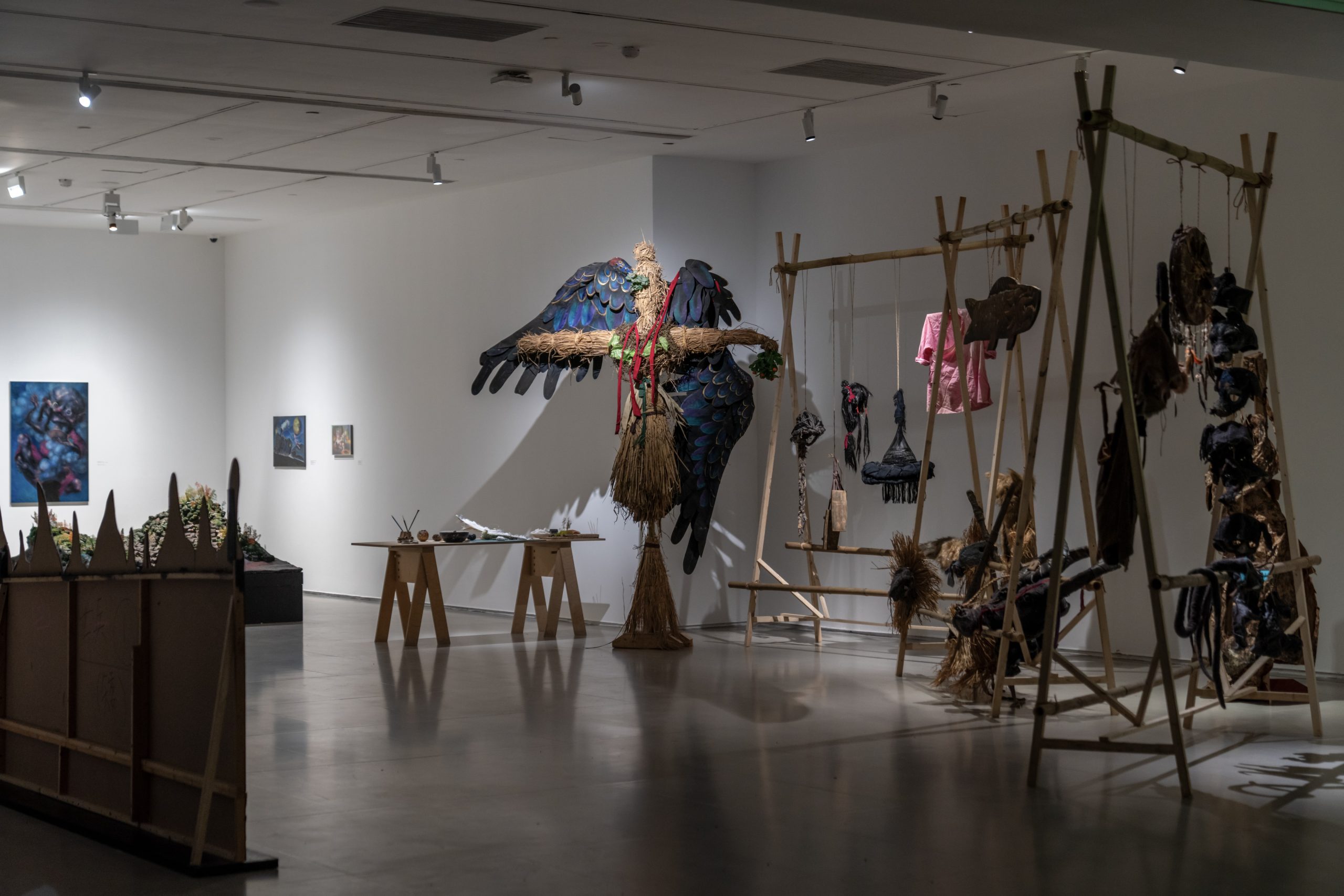
Viewers step into a “ruin” still in flux. It preserves the material traces of filming without becoming a static archive. Marks of splicing, bracing, and wear record the process of making; meanwhile, images and sounds continue to flow, while scattered figures form new relationships through altered distances, obstructions, and sight-lines. Houses, mountains, fields, and caves no longer obey a single perspective. Like a film whose sequence has been scrambled, they are distributed along the viewer’s path. Every approach, detour, and lingering glance alters how this world is perceived, allowing the ruin to continually remake itself in the here and now.
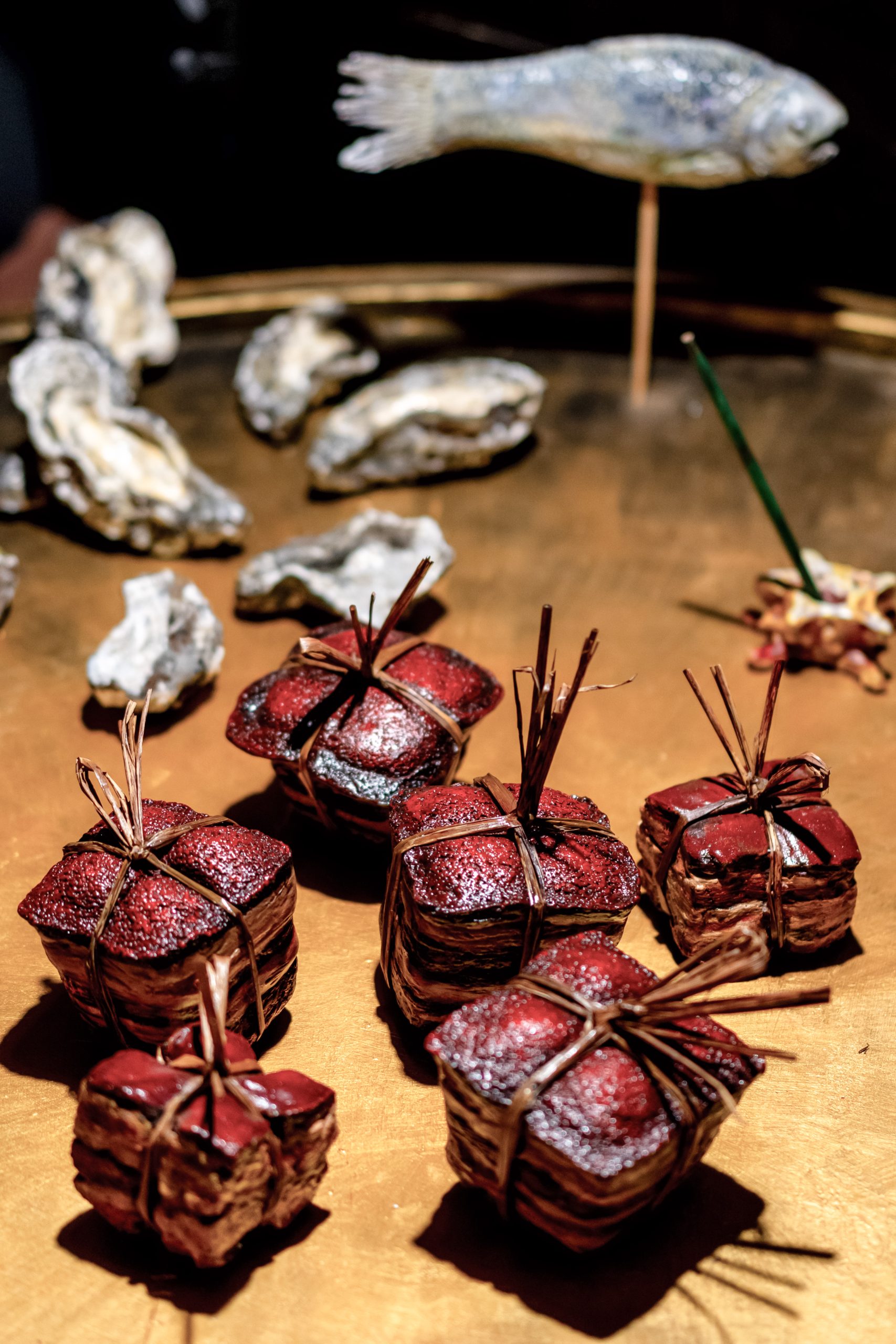
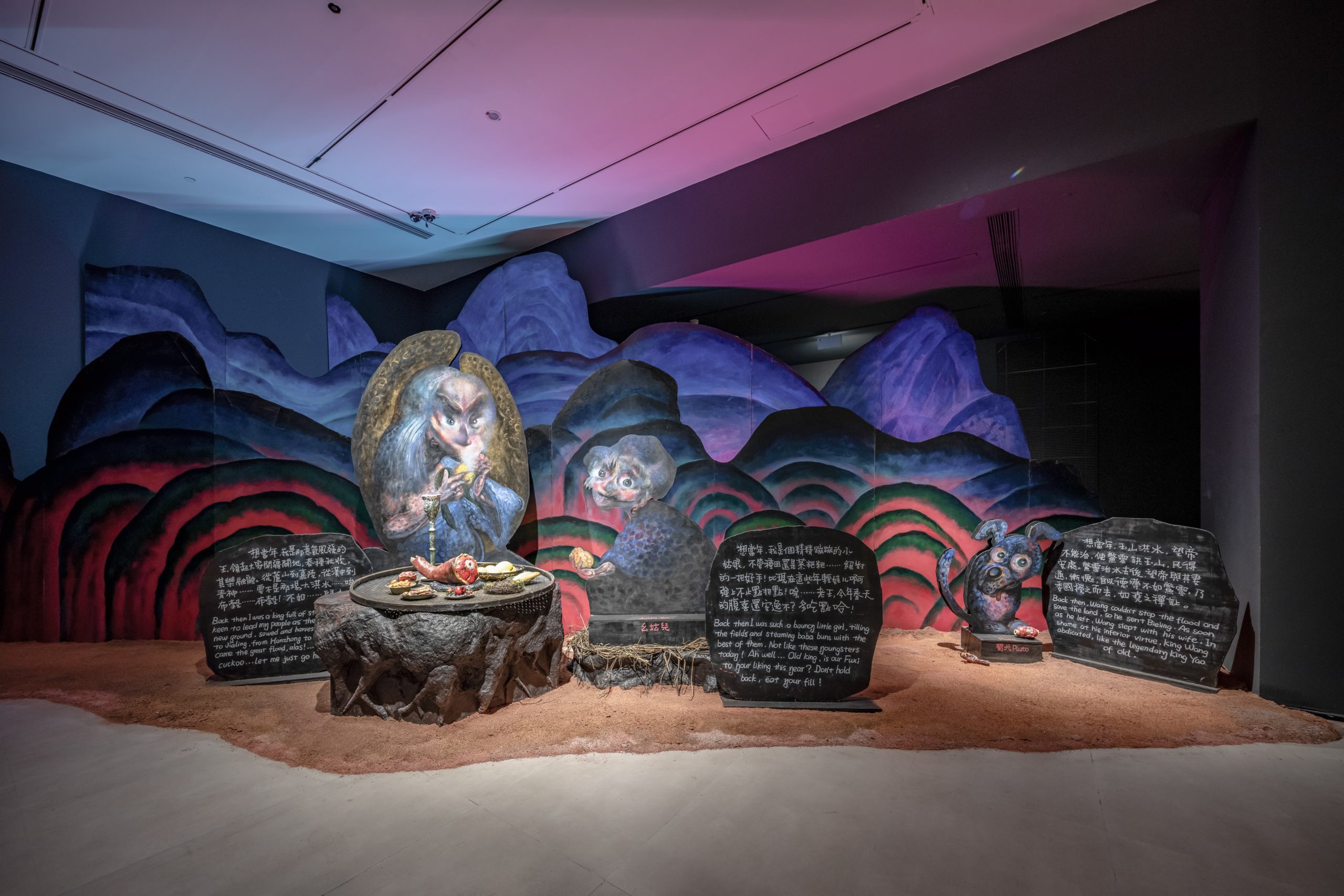
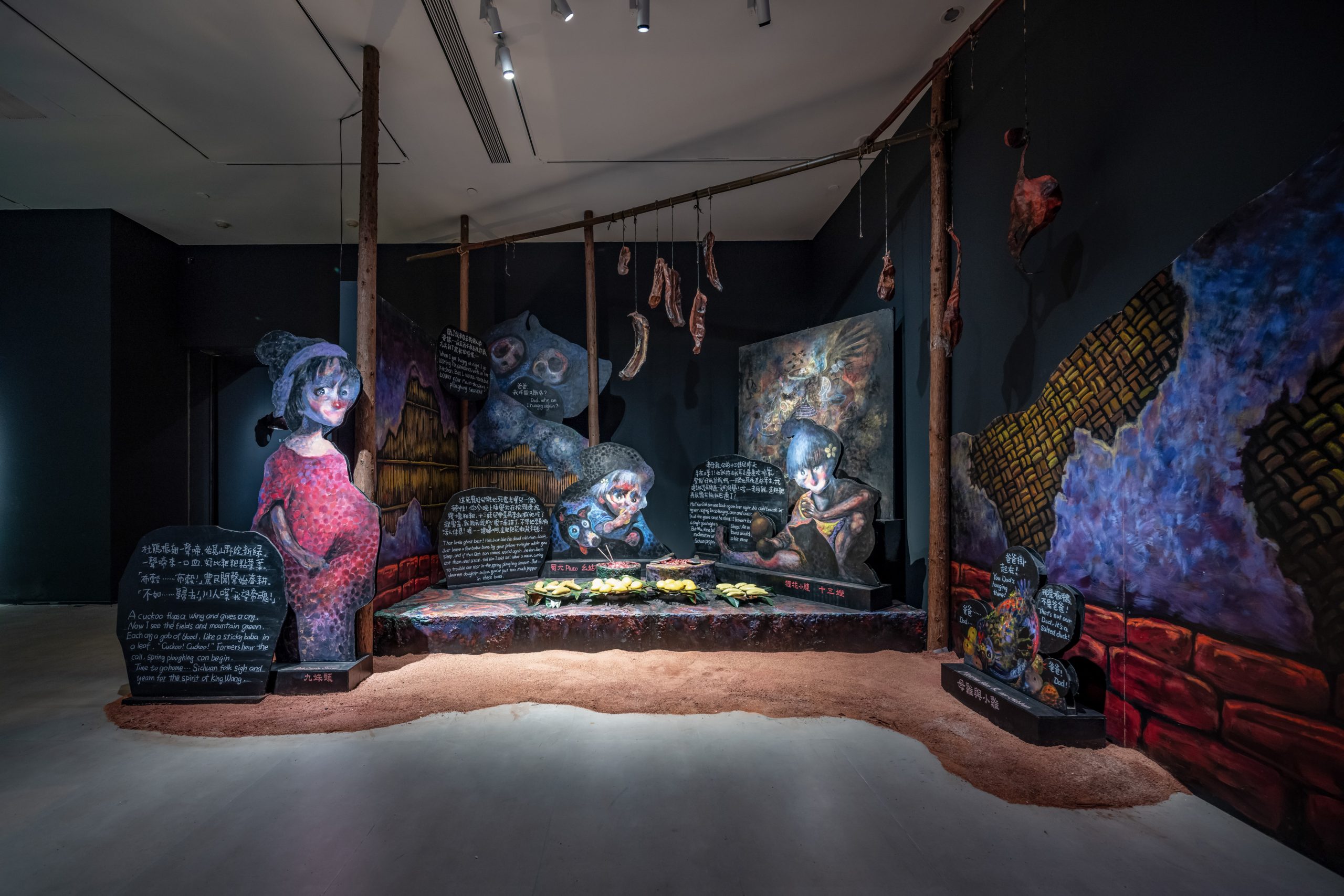
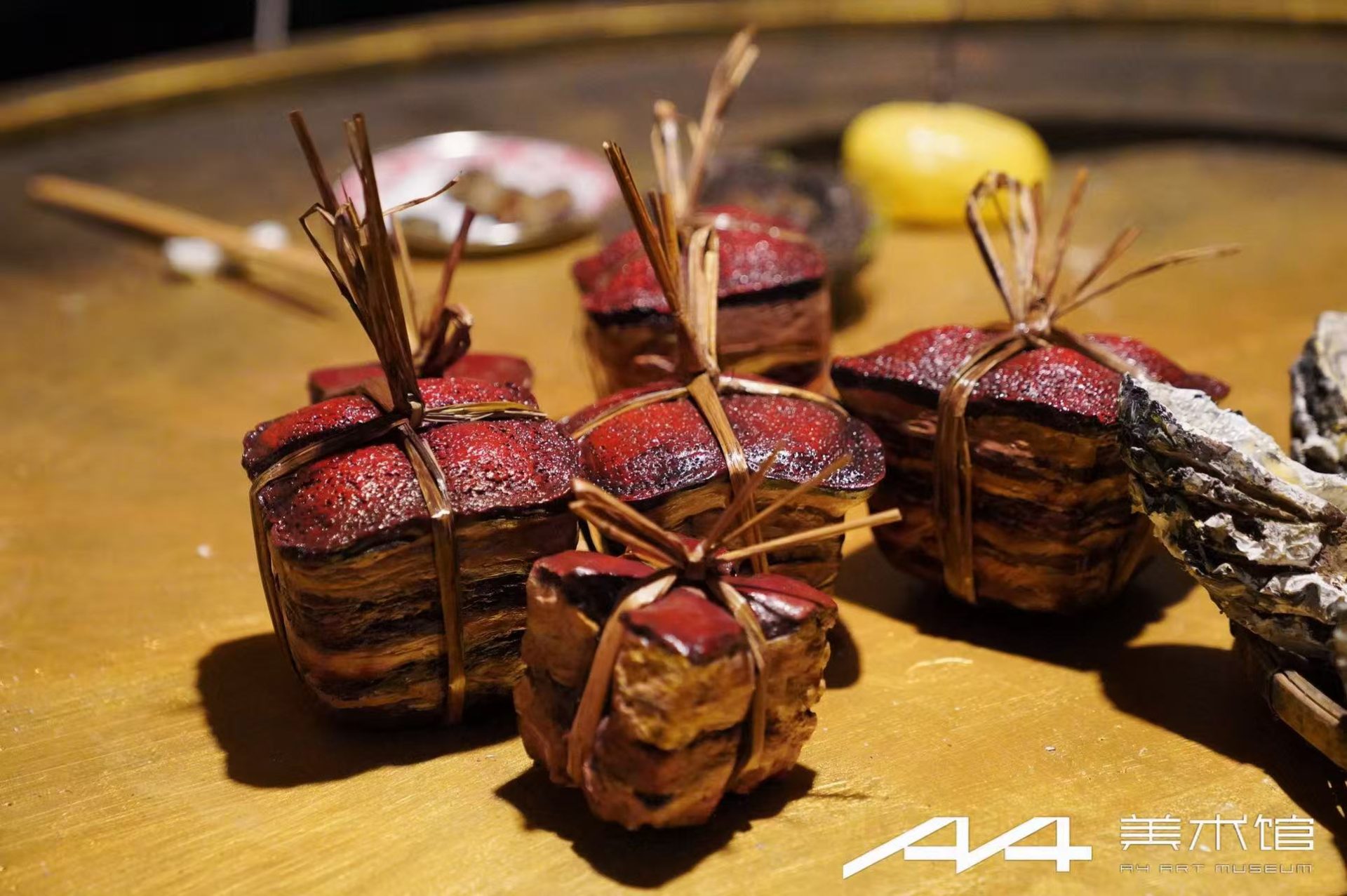
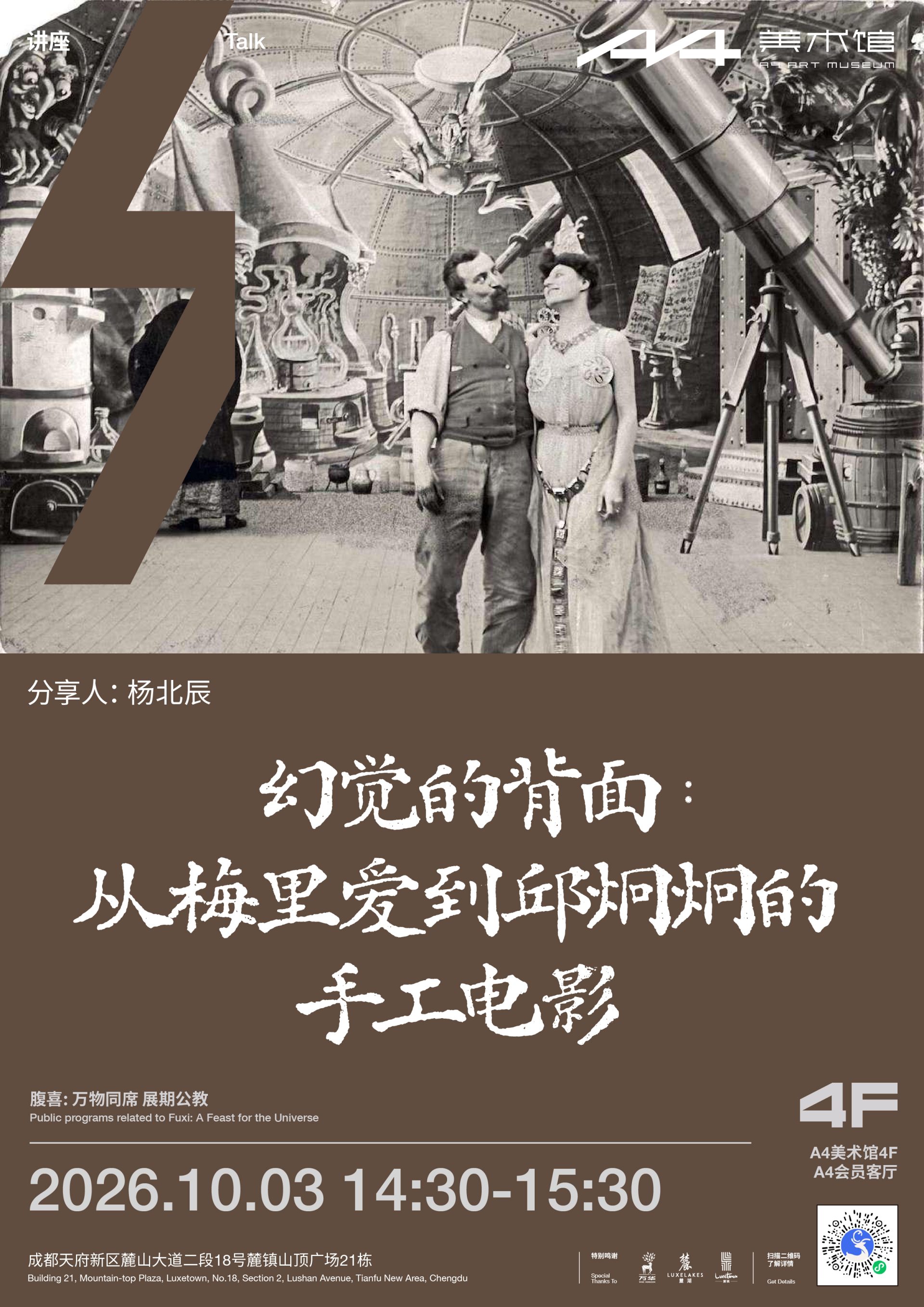
Here, the ruin is not an image of destruction, but a way of laying bare the process by which this world is made. This is the true poetry of Qiu Jiongjiong’s “handcrafted cinema”: an approach that grows out of the materials themselves. Materials no longer disappear behind the moving image, but enter the narrative with their own weight, texture, and edges. Images and objects act upon one another; different media retain their own forms while flowing into and transforming one another. The traces of their making need not be concealed; the back of the set is as much a part of the artwork as the front, bearing the seams of illusion and the fractures of time. Cinema ceases to be mere light on a screen; it takes physical form in a space shaped by matter, distance, and the body.
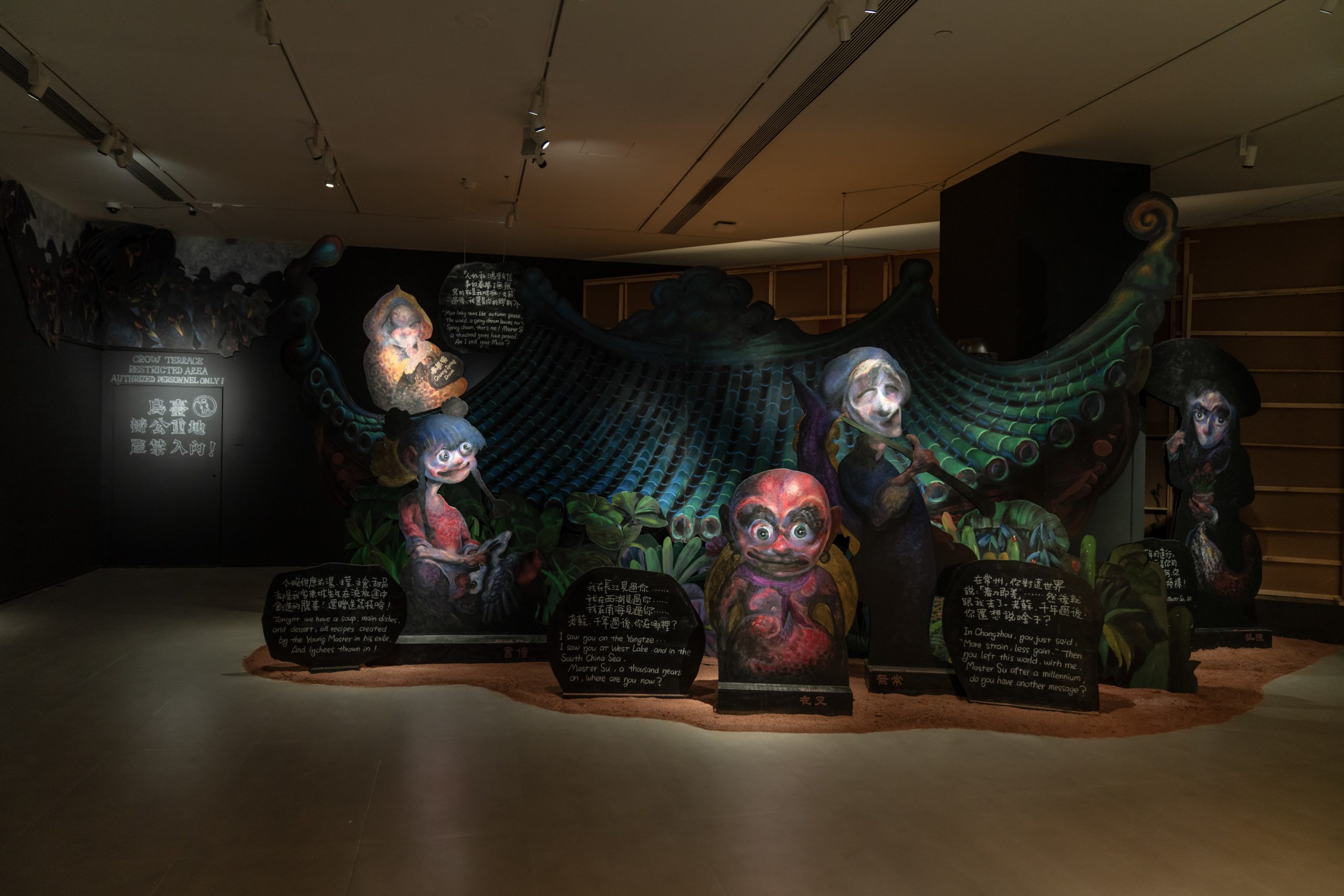
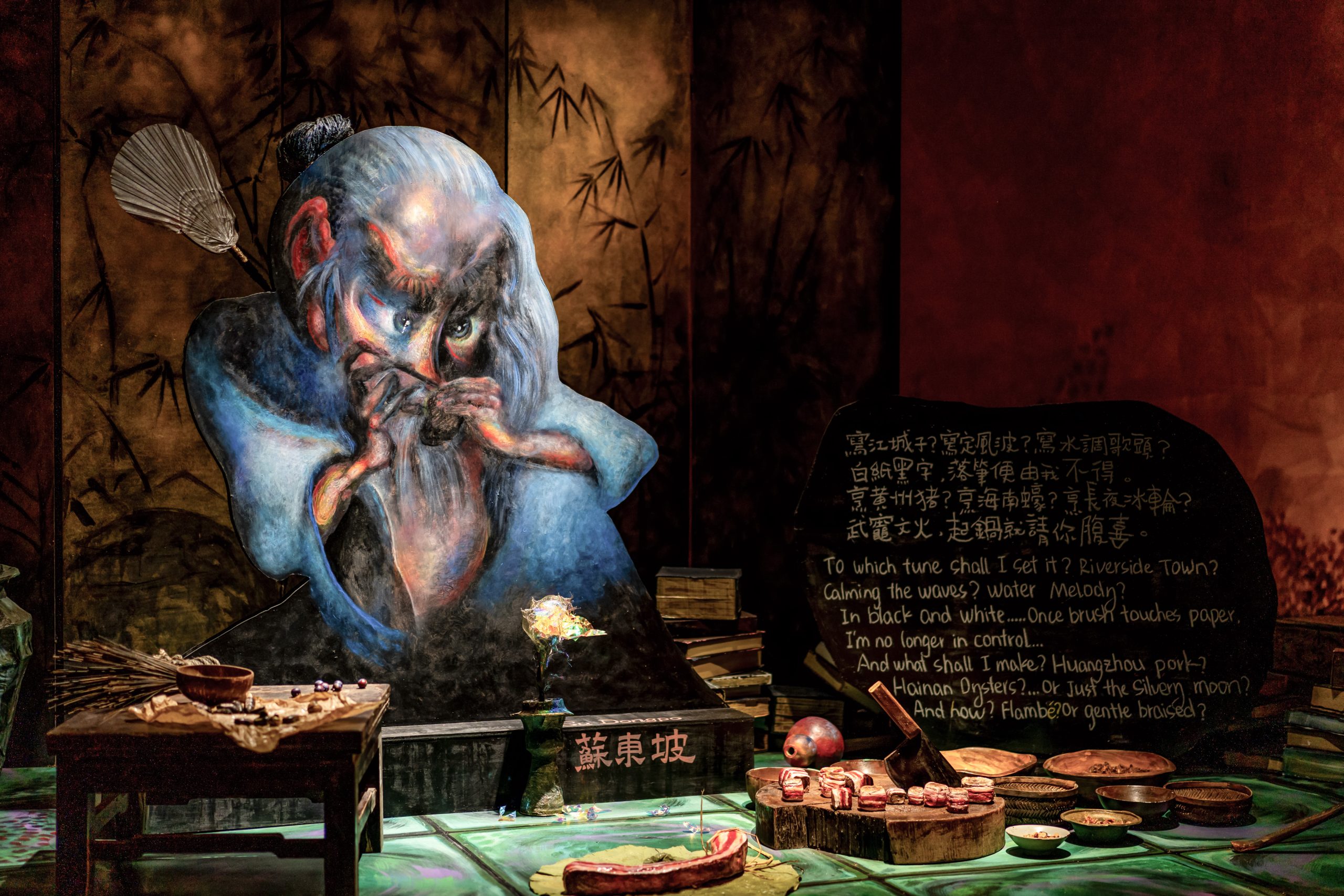
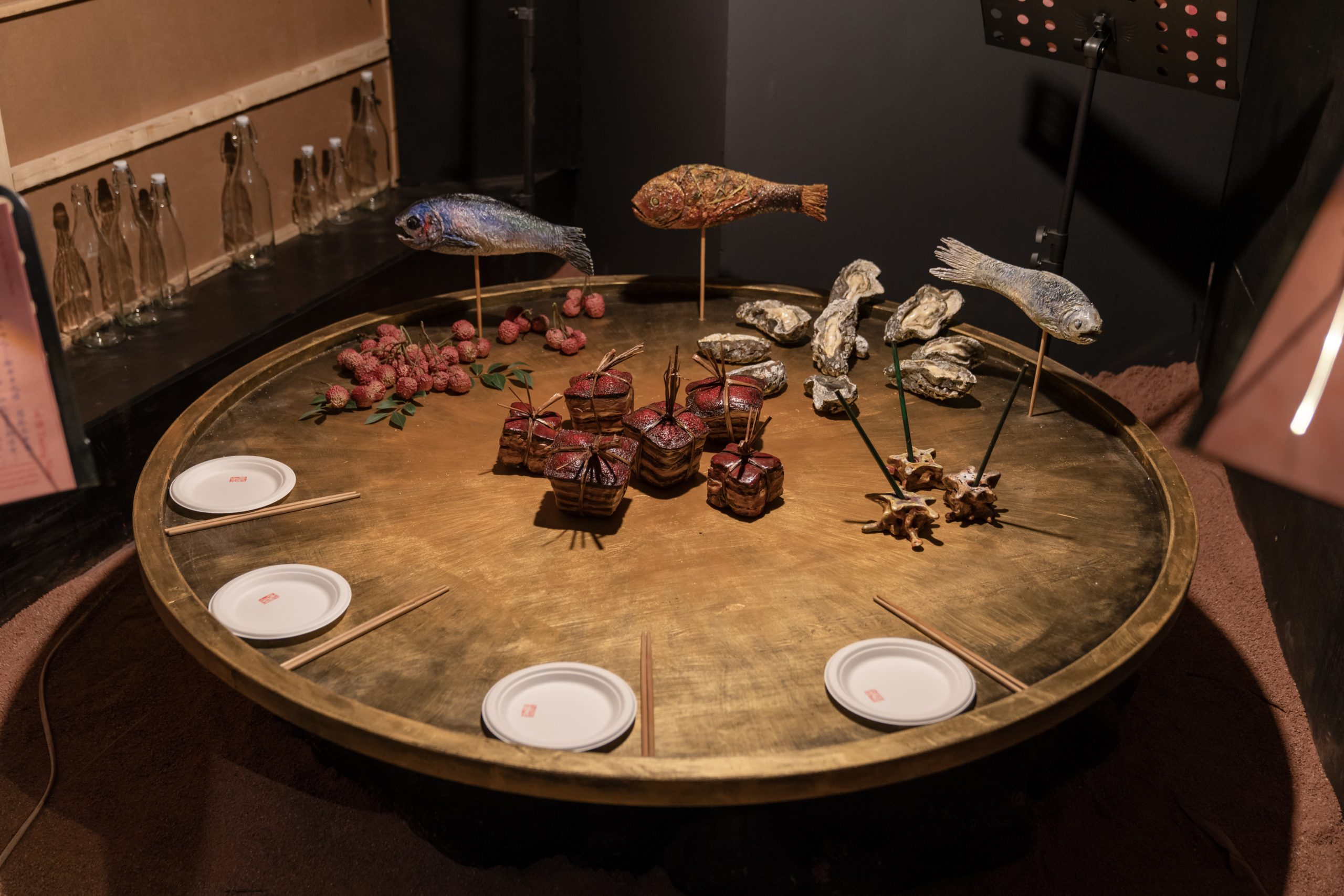
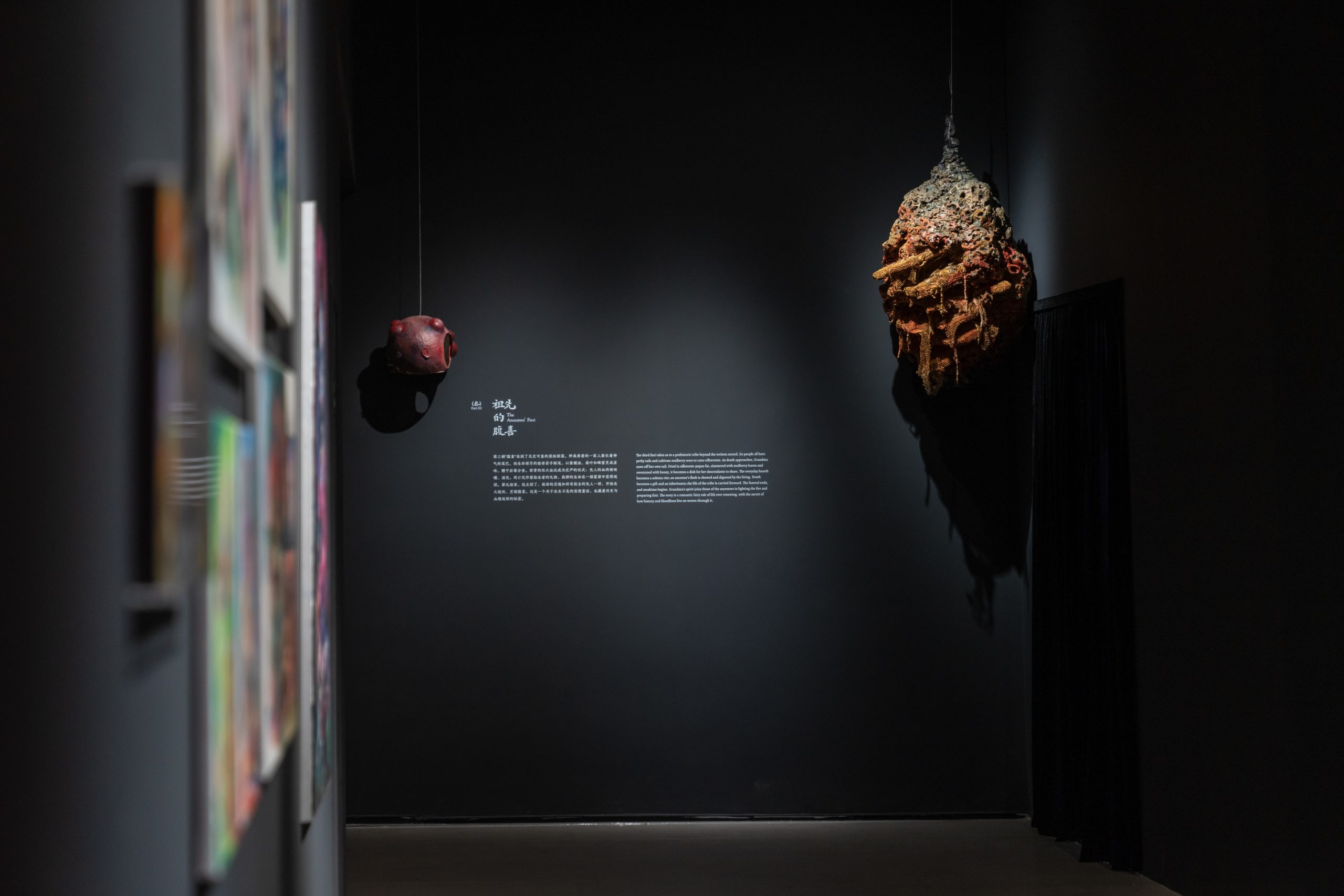
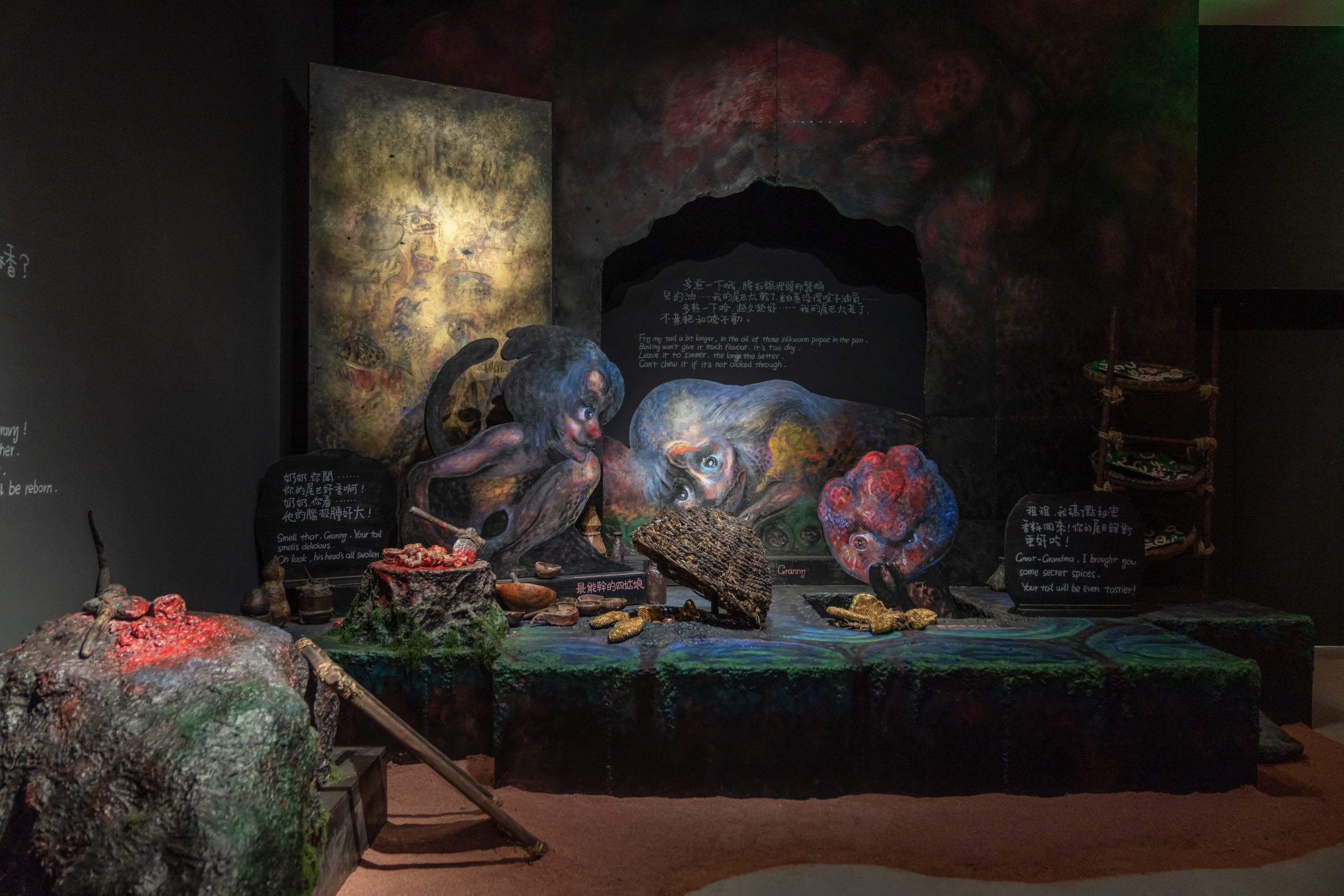
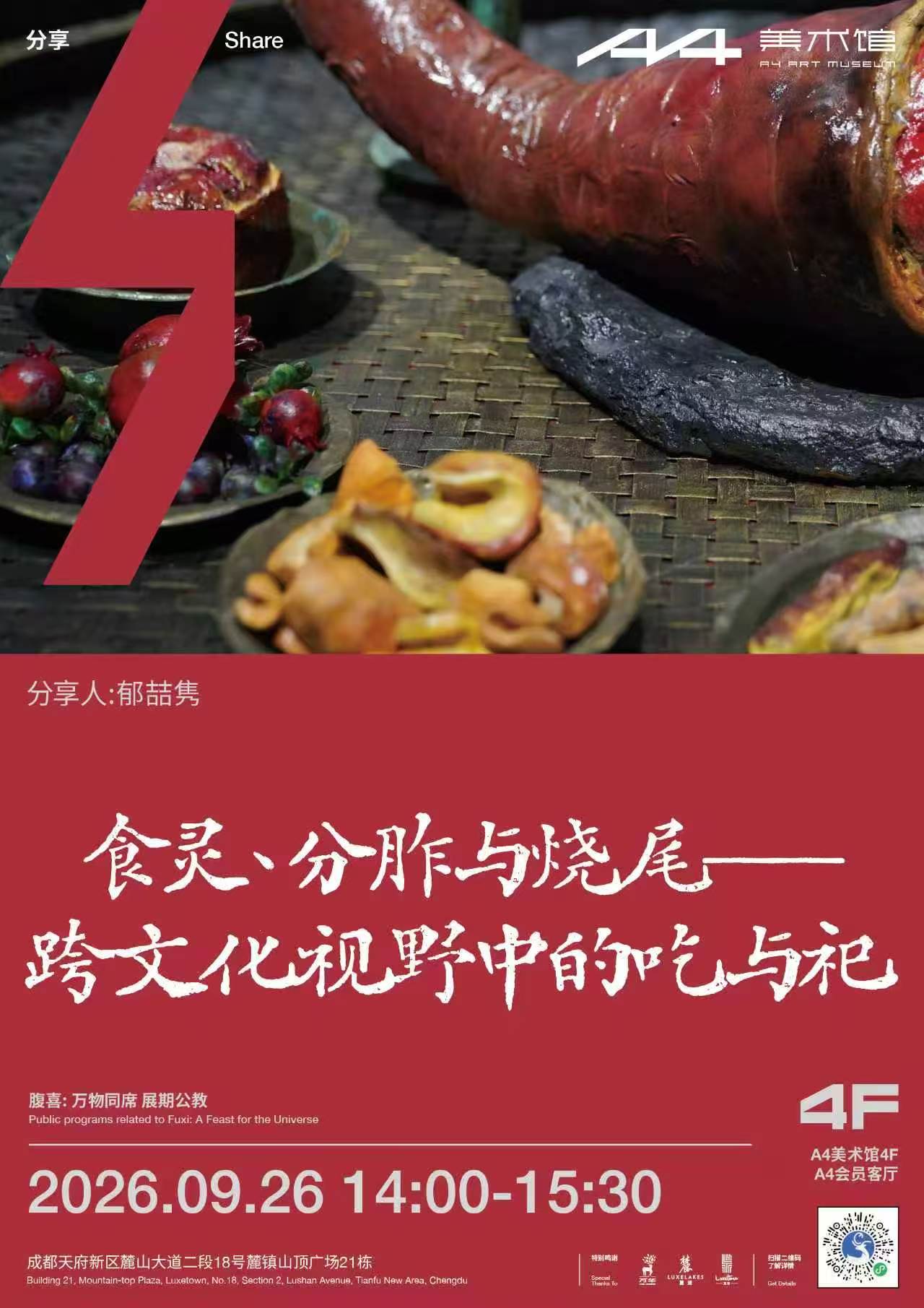
As viewers move through the exhibition, they travel backward into deeper time. At Su Dongpo’s Mid-Autumn feast, spirits left behind by history use recipes he recorded during his years in exile to summon back a guileless man of letters, out of step with his time. At Duyu’s Spring Rite, a former king transformed into a cuckoo remains attached to his vanished power, while farm women hold fast to the land through baba buns and day-to-day labor. At an ancestors’ farewell feast, a dying grandmother cooks part of her own body into food for her descendants, turning death into a gift that lets life continue. Three feasts and three kitchens thus become three portals into time, life and death, and memory. History becomes lived experience that can be chewed, tasted, and digested. Grand epochs recede into the distance, while the appetites and domestic skills so often overlooked come to the fore.
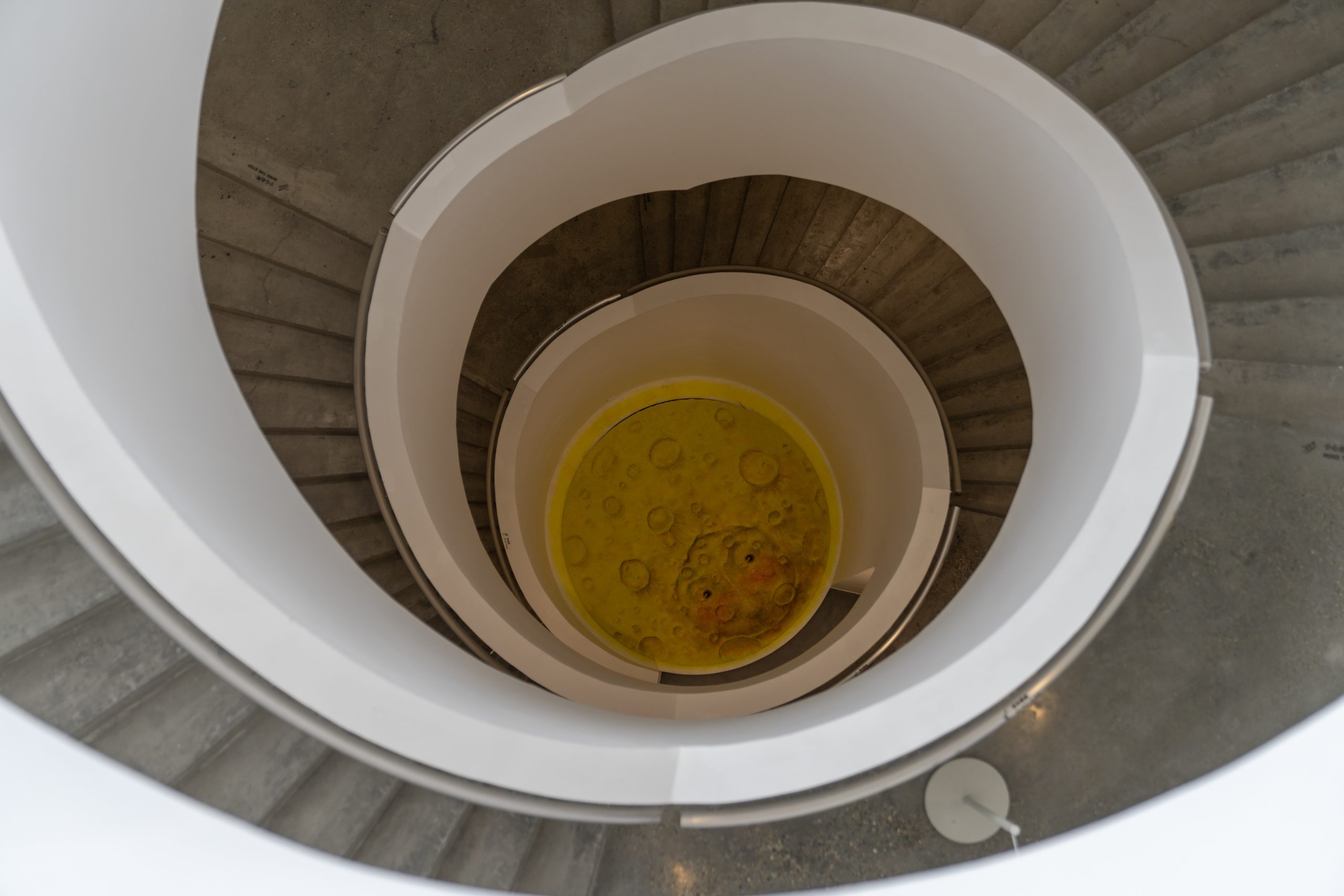
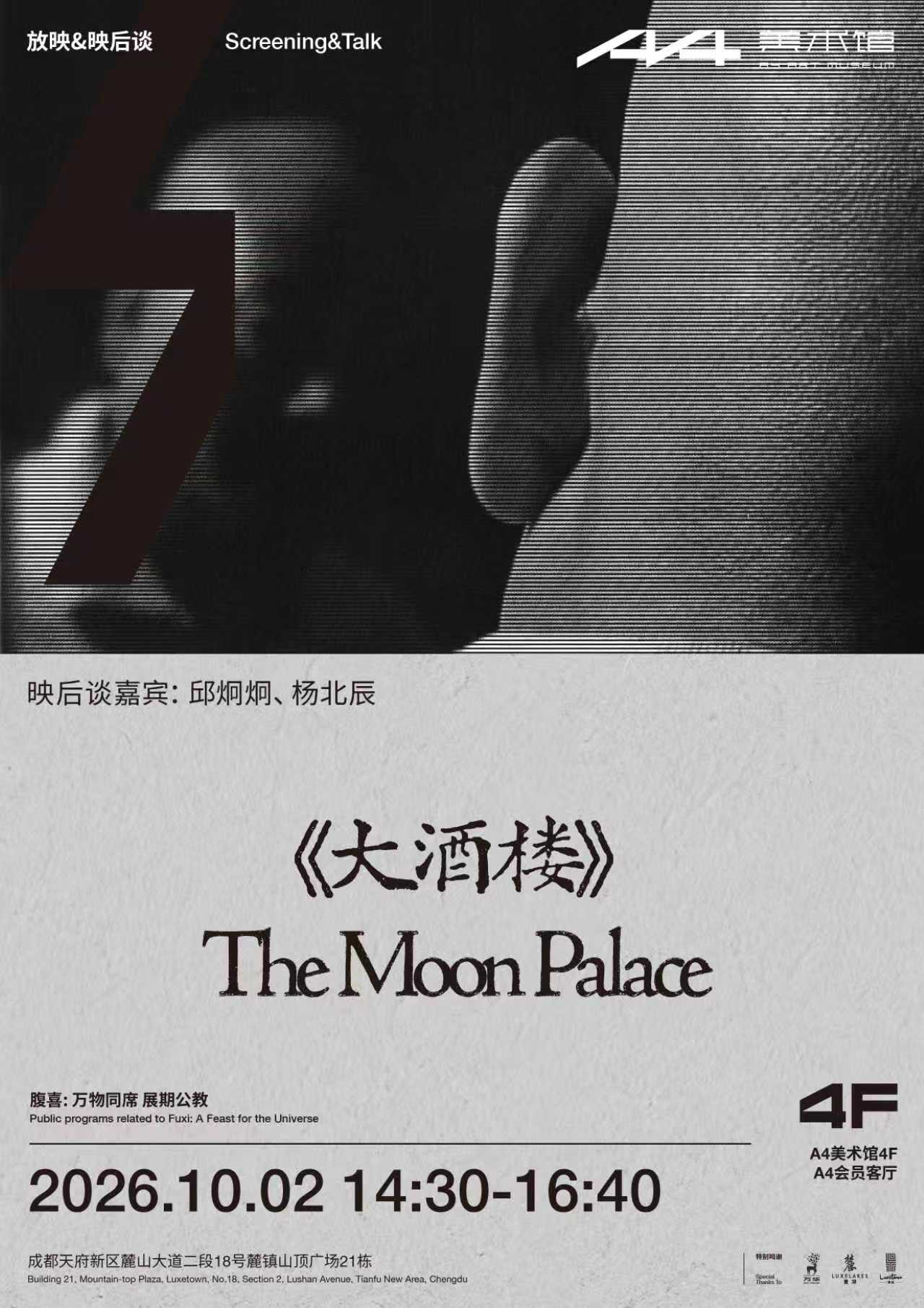
The exhibition as a whole might, in turn, be imagined as a dongtian—a “grotto-heaven,” a hidden realm nested within the ordinary world. The viewer enters its depths from the threshold of the present, passing through times and scenes folded into one another and wandering between apparition and historical fact. Cinema is an act of conjuring the dead, a mode of looking that openly acknowledges its own fictions. Between ambiguous historical records and fragmentary memories, imagination fills what has been left blank, while images call the absent back into presence. In doing so, cinema reminds us not to fabricate a definitive face for the past, but to preserve the possibility that those who have disappeared, and those things that remain unseen, might take form again.
Qiu Jiongjiong tells stories with the sensibility of a “cook,” turning fuxi into an ever-evolving Sichuan feast where dishes are served, tables cleared, and the banquet begins anew. Here, history is no longer complete or smooth. It is neither a seamless, solemn timeline nor a monument erected for reverence. People sustain the rhythms of their lives through labor, food, humor, and stories, as they face life’s impermanence. All the while, aging, separation, and the violence of the times linger at the edges of the feast. “Joy,” then, is no lighthearted embellishment, but a way of facing the turns of fate.
Fuxi promises no resolution, nor does “sharing a table” mean erasing the differences among all things. Hunger and abundance, power and labor, remembrance and forgetting remain present at the table. Yet during this brief time together, beings from different eras, species, and worlds are given the chance, however fleetingly, to see one another. A funeral becomes a celebration; ghosts yearn for a feast; even in adversity, people still take care over what they cook. Life and death are not opposing ends, but alternate like the rising sun and the setting moon. It is in these fleeting passages from one to the other that life reveals a force that cannot easily be extinguished.
The exhibition itself is a fuxi: a feast as lavish or modest as circumstances allow, teeming with strange tales born amid sizzling woks, everyday cooking, and the ordinary necessities of life. Cinema turns what has vanished into light and shadow; the exhibition gives light and shadow weight once more. Fuxi: A Feast for the Universe invites viewers into this living ruin. The table is set, and the stories are still being made. The living and the dead, grasses and trees, birds and beasts, the sun and moon—and “you”—are arriving one after another.
All things come to the feast; all gather around the same table. Within arm’s reach, the scene begins anew.
Text by Yang Beichen