A4 Art Museum
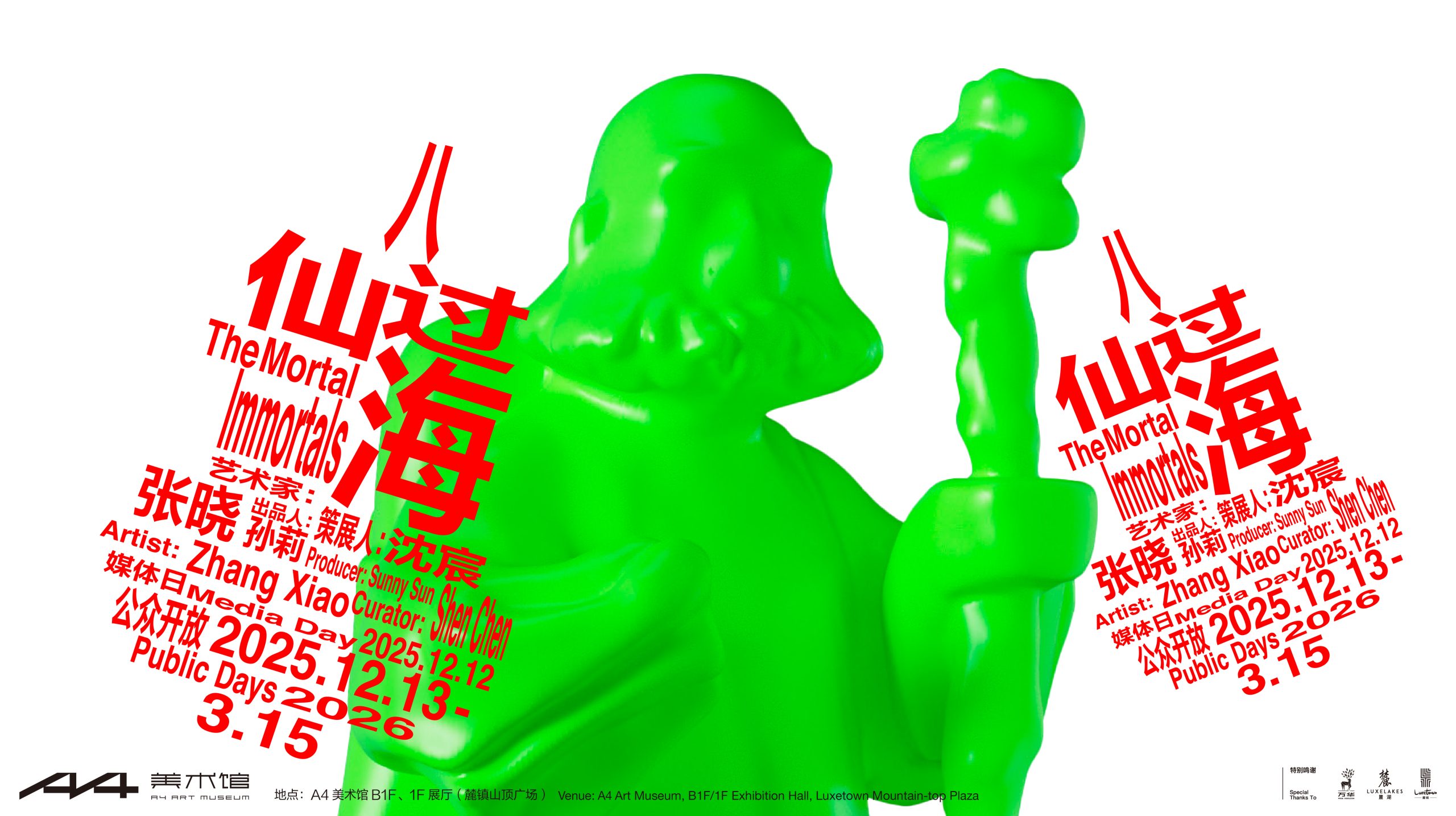
Zhang Xiao’s Solo Exhibition: The Mortal Immortals
2025.12.13-2026.03.15

A4 Art Museum
Building 21, Luxetown Mountaintop Plaza, No,18 Lushan Avenue Section 2, Shuangliu District, Chengdu, Sichuan, China
Tel: 86(028)85761265
Email: a4office@a4am.cn
A4X Art Center
Luxelakes Eco Art Center, Shuangliu District, Chengdu, Sichuan, China
A4 Kids Space
Luxelakes Eco Art Center, Shuangliu District, Chengdu, Sichuan, China
A4 Residency
Building 1, Unit 1, 11th Floor, Luxezone, Luxelakes Eco-City, Tianfu New Area, Chengdu, China
Tel: 86(028)85761810
Email: a4residency@a4am.cn
Tuesday to Sunday, 10:00AM to 6:00PM (last entry at 5:30PM)
Closed on Monday (except during the Spring Festival, open on public holidays)
The exhibition title, “The Mortal Immortals,” originates from a widely known folk legend rooted in Zhang Xiao’s hometown of Yantai (Penglai). As Lu Xun noted in A Brief History of Chinese Fiction, the tale describes how these eight figures—individuals of vastly different ages, genders, social classes, and backgrounds—attained immortality through mutual support and enlightenment, eventually uniting to resist the Dragon King and cross the East Sea.
Hometowns, folklore, eccentric figures, and strange rumors are recurring motifs in Zhang Xiao’s work—creations that often feel magical yet are never entirely fictional. The fantastical story of the Eight Immortals provides both a structure and a metaphor, allowing us to observe the core of Zhang Xiao’s artistic practice, where “personal history” and “people’s history” intersect. Within the folds of tradition and modernity, faith and rationality, and memory and reality, how do ordinary individuals rely on their own wisdom, resilience, and perhaps a touch of the “supernatural” to complete their own existential and spiritual “crossings”?
In the rapidly changing landscape of contemporary China, “hometown” serves as both a geographical coordinate and a spiritual enclave. It carries the lingering warmth of collective memory while nurturing complex contemporary myths. Zhang Xiao’s work resembles a long “homecoming,” yet what he traces is not a bucolic, nostalgic past. Instead, it is a field of negotiation, hybridity, rupture, and re-creation. Here, pre-modern “ghosts,” grassroots wisdom, and the tides of the era entwine to form surreal yet vibrant tableaus. That non-conformist, vital spirit of “each displaying their own prowess” (gè xiǎn shén tōng) is precisely the spiritual temperament Zhang Xiao has keenly captured through his deep immersion in folk society.
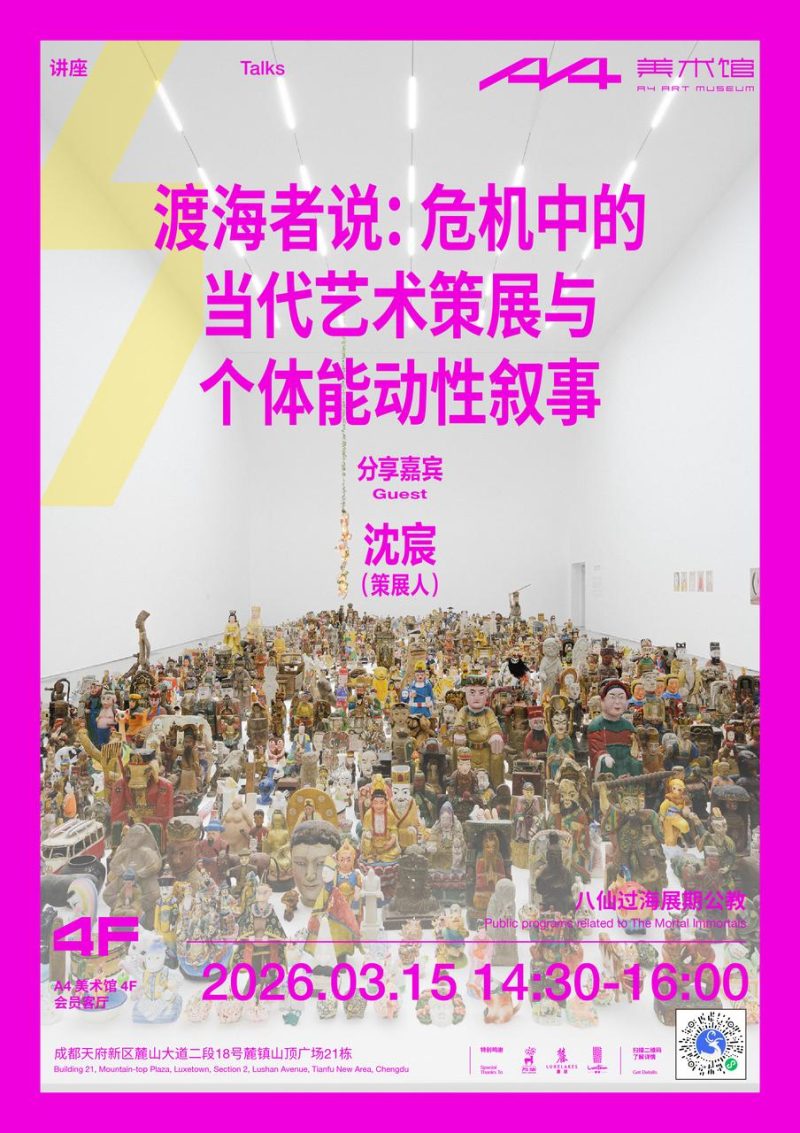
*Zhang Xiao The Mortal Immortals – Exhibition Public Education Program