When we finish a day’s work, take a car home, unlock the door with a key, and step inside, we plug our nearly depleted mobile phones into a charger and socket. We then walk into the kitchen to cook rice in an electric rice cooker, and afterward enter the bathroom. Water heated by the water heater flows through the showerhead, washing away the fatigue of the day.
All of the objects mentioned above share one common feature: copper constitutes an essential part of their functionality. Any metal component that requires electrical conductivity, water flow, and durability is fundamentally inseparable from copper. Copper is ubiquitous in our daily lives.
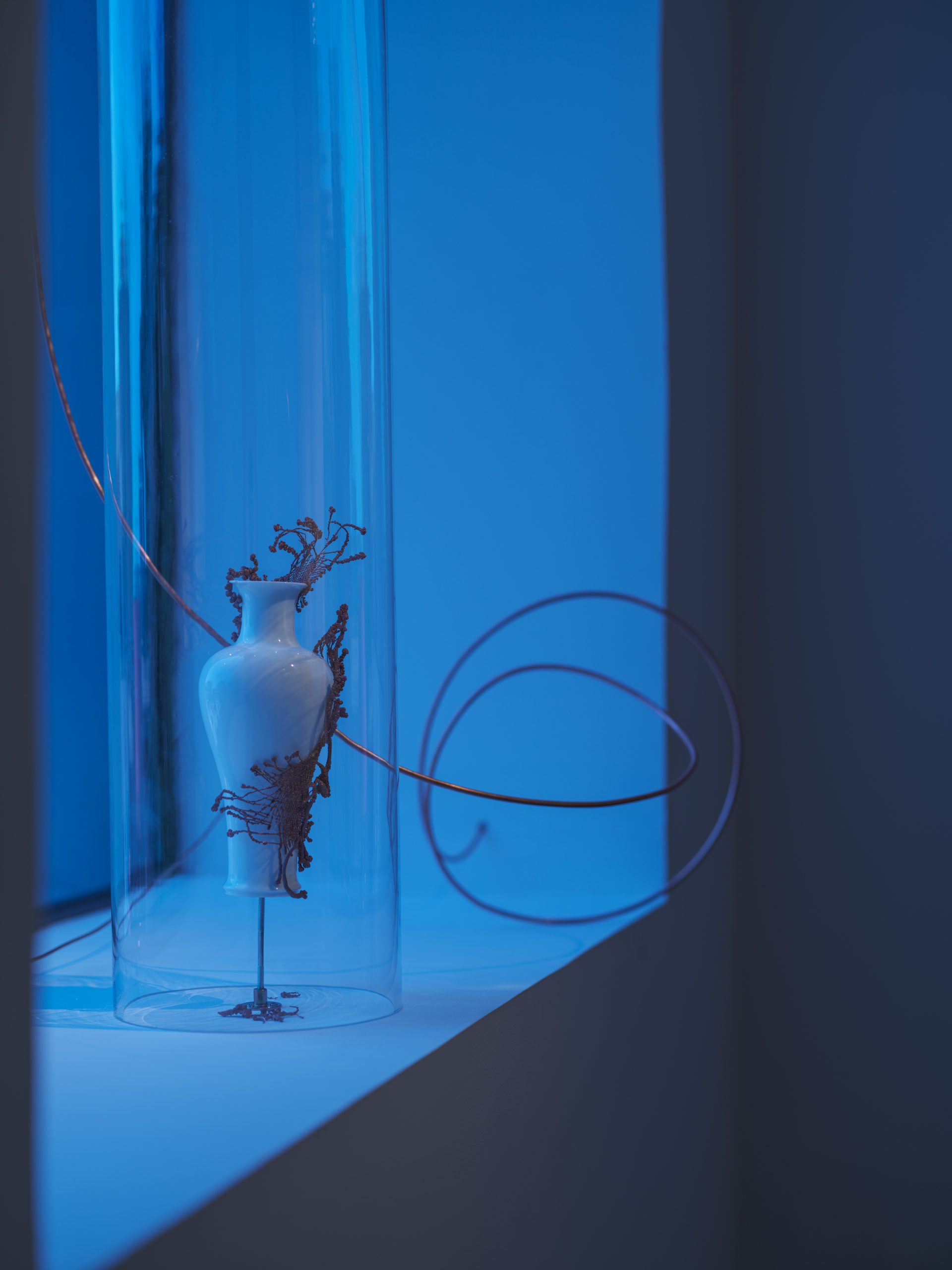
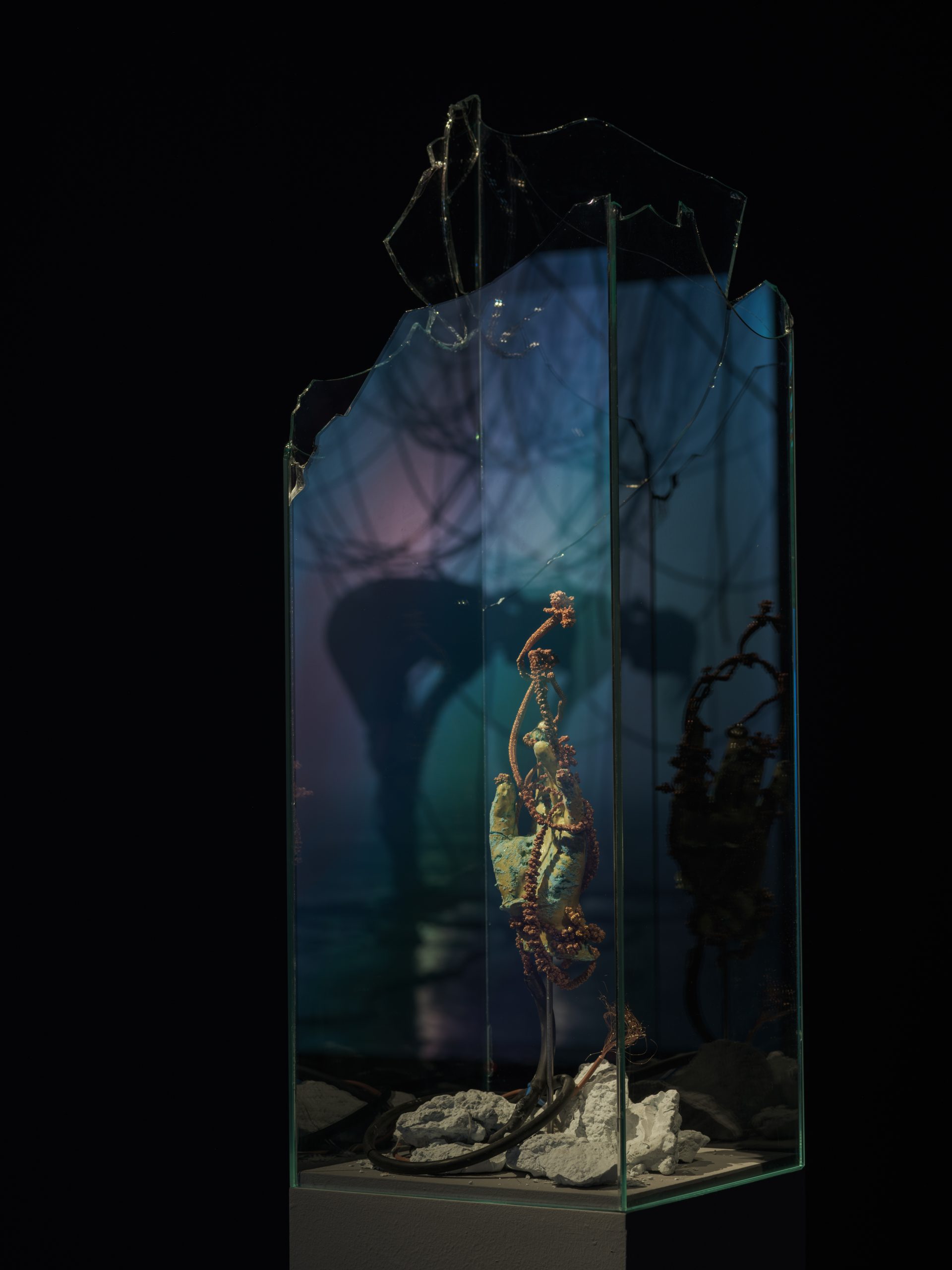
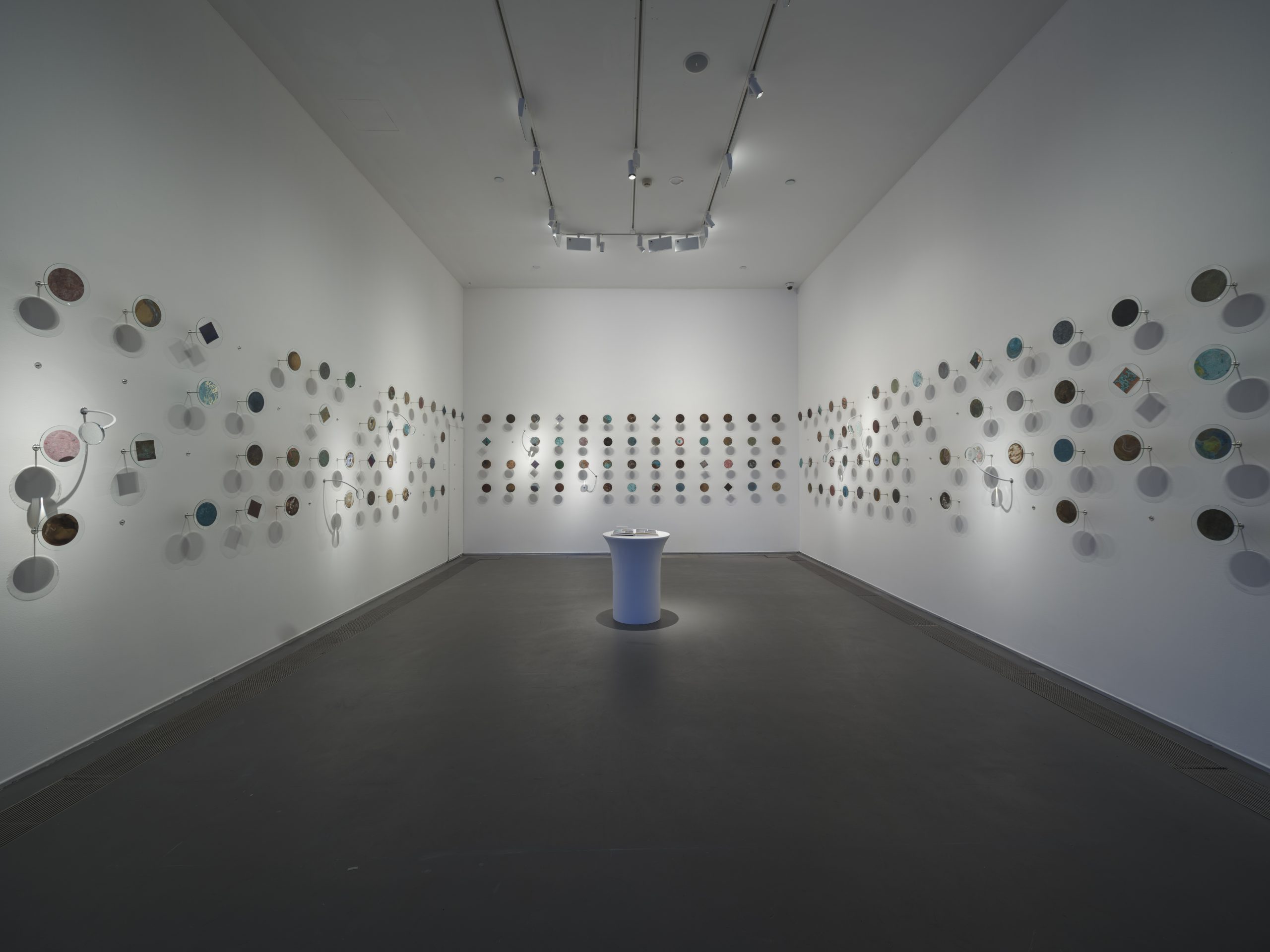
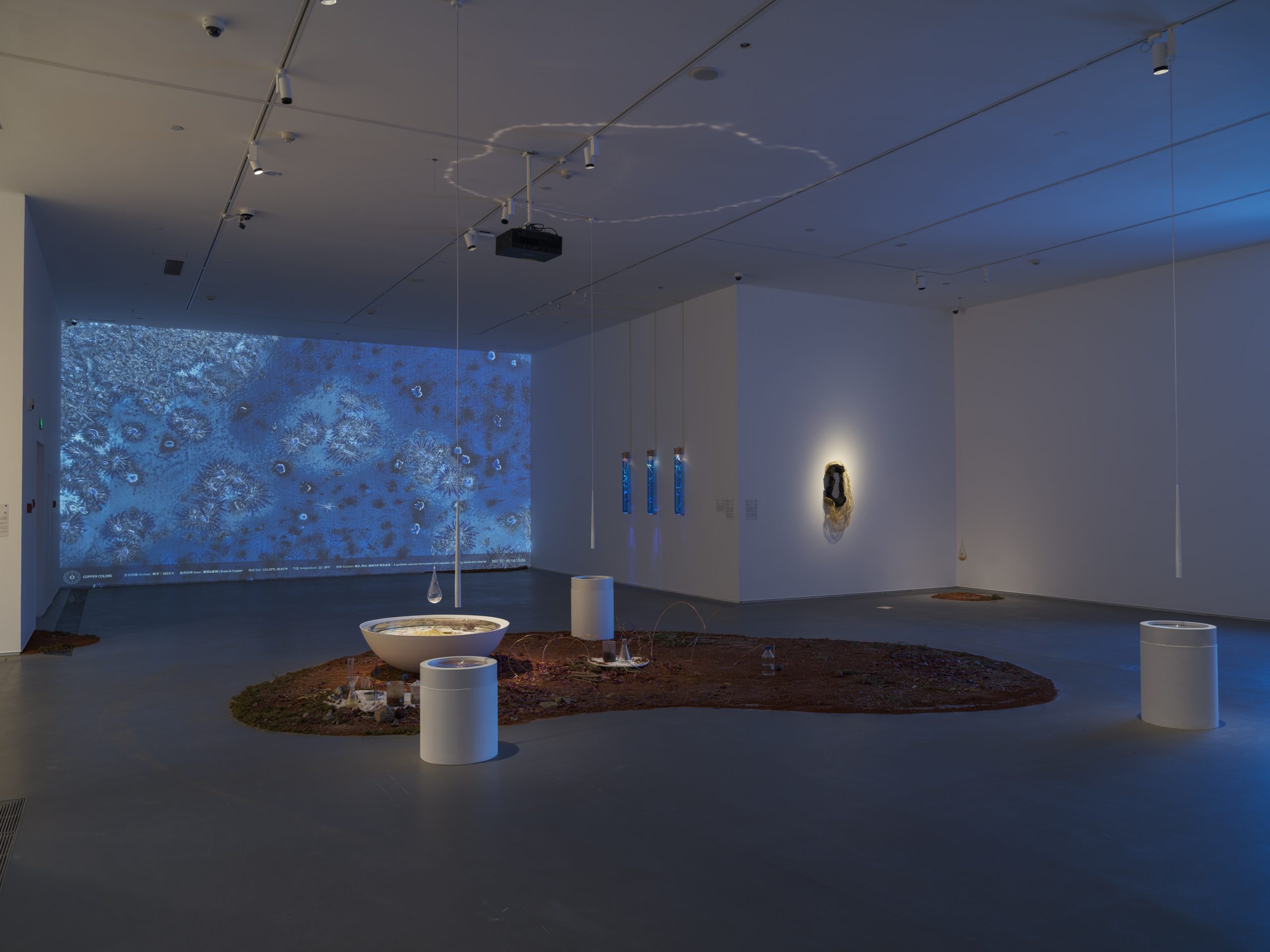
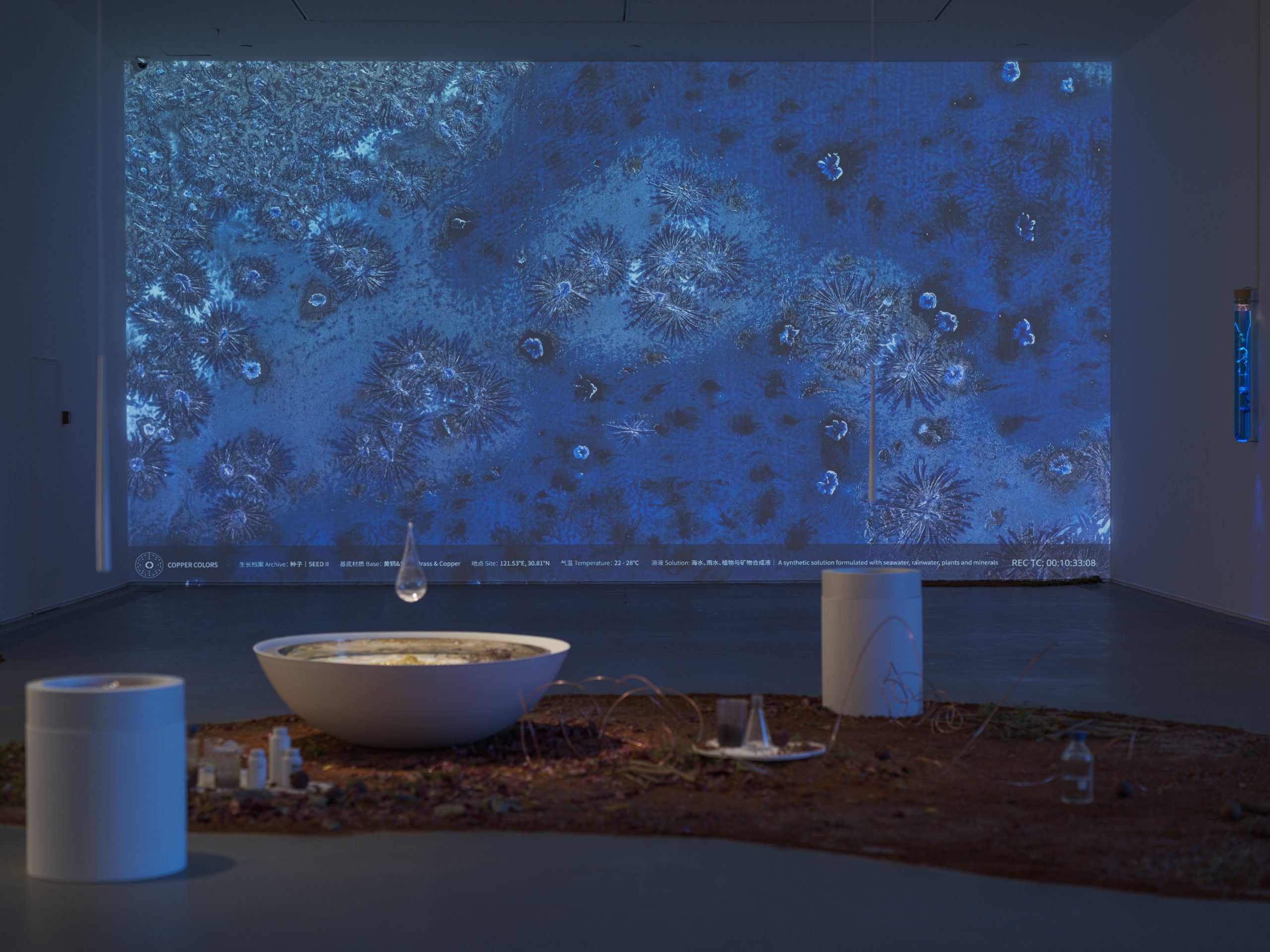
In 2015, while still studying industrial design, Luo Daishi discovered, during her exploration of jewelry design, that when heated, copper displays colors resembling peacock feathers; as the flame moves, the colors shift and flicker accordingly. From that moment, she was drawn to copper and began her exploration of it. Subsequently, Daishi traveled to 42 workshops across China related to copper coloration, including those in Luoyang, Baoji, Suzhou, and Tongling, to investigate folk bronze patination techniques—approximately 3,000 years ago, China began the large-scale production of bronze ware, and these techniques were gradually transmitted within folk traditions. Daishi’s fieldwork enabled her to understand the current state of the development of copper coloration techniques in China; at the same time, the use of local materials and natural resources in folk practices inspired her to consider the possibilities of collaboration between copper and nature. Beginning in 2018, Daishi’s research on copper coloration entered a phase of archiving and systematization: she controls the formulas and methods of the solutions that trigger reactions in copper, while leaving space for uncontrollable elements in the interaction between material and nature—time, temperature, humidity, and so on. She refers to this working method as “uncontrollability within control.” To date, she has developed a copper color spectrum consisting of 528 variations in color and texture, which has become the foundation of her “language system.” She then further explored the ways in which copper transitions from flat surfaces to three-dimensional crystalline growth, advancing her practice through an interdisciplinary mode of thinking and continuously probing the boundaries between science and art.
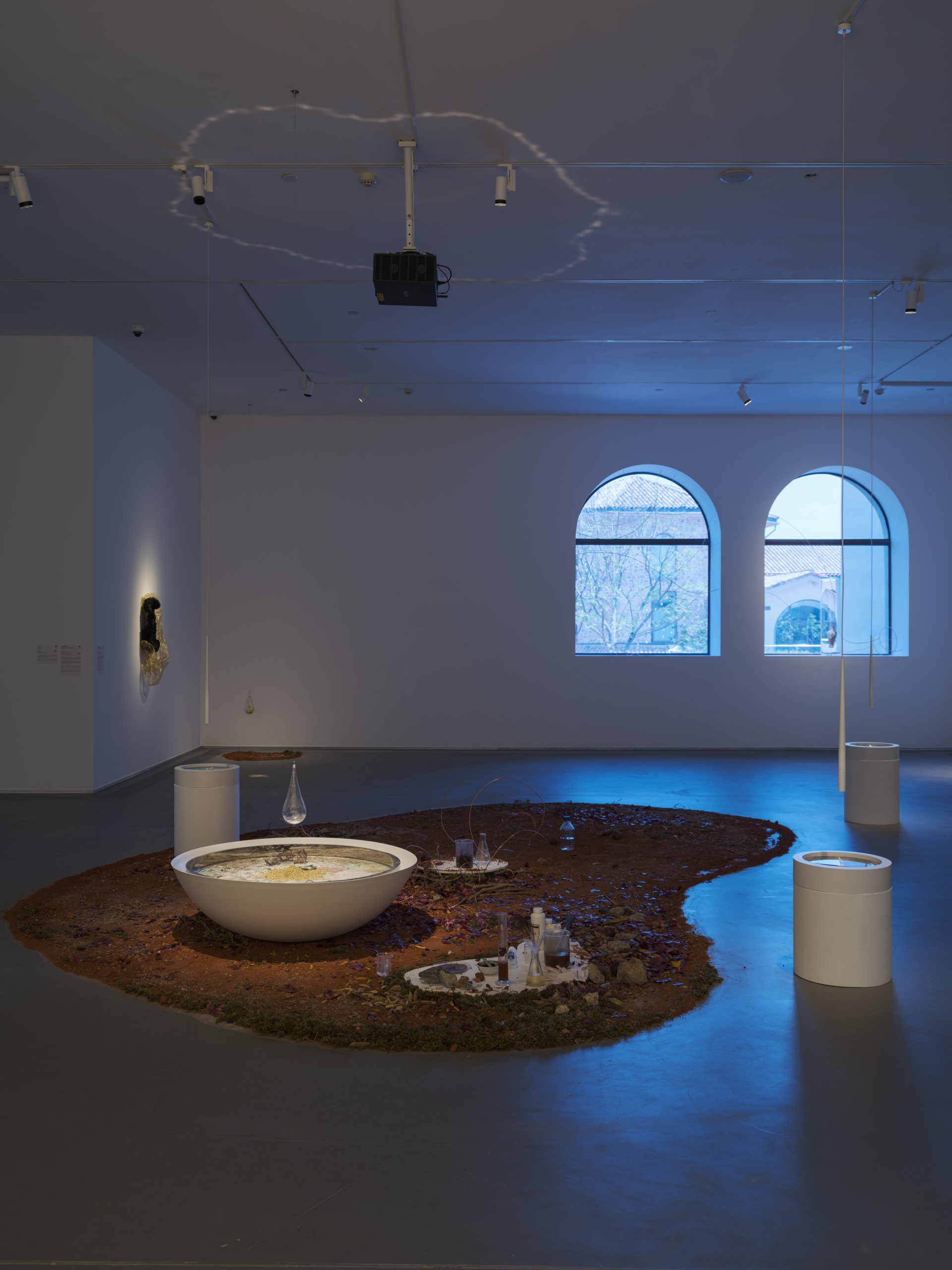
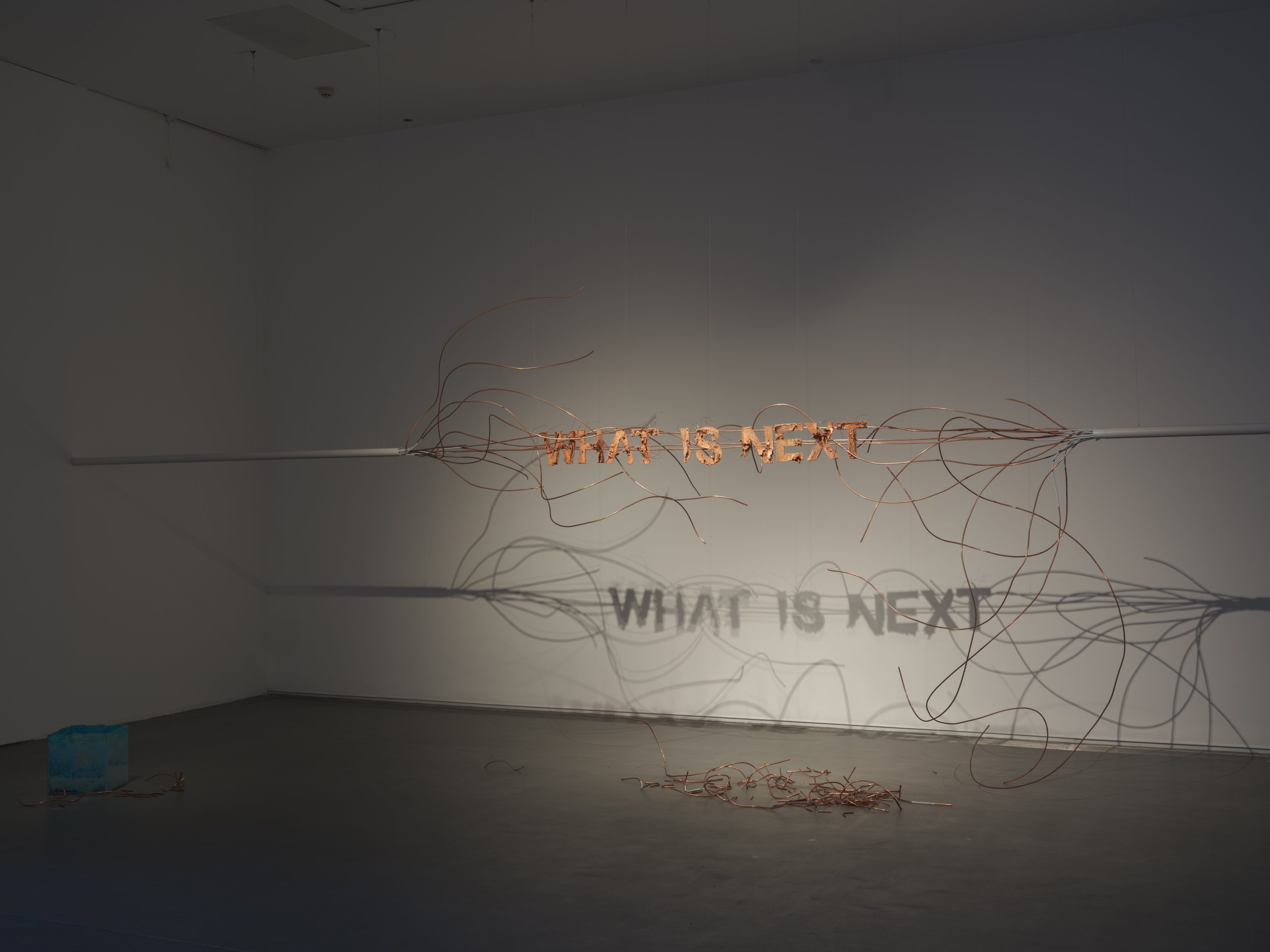
Today, we find ourselves in the midst of a technological revolution driven by the rapid development of artificial intelligence, and each of us can almost feel how this wave is moving through our lives. As one of the most important conductive metals, copper has also been pushed to the crest of this wave. Therefore, in this exhibition, we will also see that Daishi’s recent works are closely connected to the ongoing development of technology as a broader context—shielding meshes used in infrastructure, discarded electrical wires, and the accelerated extraction of copper ore all reflect human imaginings of resources, along with the desires and systems of control embedded within them. At the same time, we will also see that Daishi employs many natural materials, such as medicinal plants, minerals, soil, and seawater, to enter into relationships with copper—whether through entanglement or symbiosis, rupture or collaboration. Each of us is within this wave, uncertain of where the future will lead (what’s next). Symbiosis and coexistence constitute the stance within Daishi’s practice.
Yuting Yang
*This exhibition is presented within the framework of the A4 Art Museum Y+ Project Young Artists Exhibition Program. *