A4 Art Museum
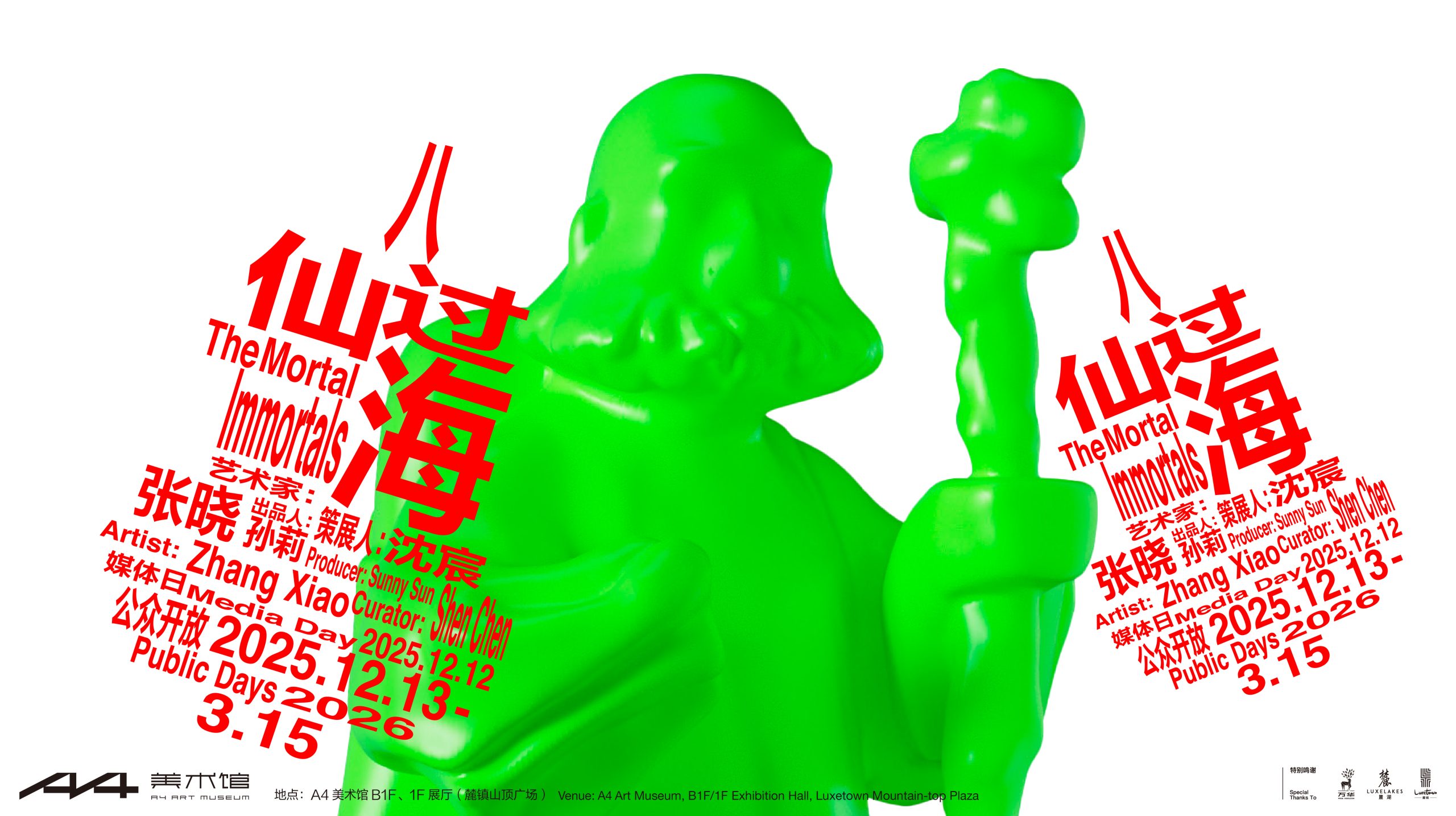
Zhang Xiao’s Solo Exhibition: The Mortal Immortals
2025.12.13-2026.03.15

A4 Art Museum
Building 21, Luxetown Mountaintop Plaza, No,18 Lushan Avenue Section 2, Shuangliu District, Chengdu, Sichuan, China
Tel: 86(028)85761265
Email: a4office@a4am.cn
A4X Art Center
Luxelakes Eco Art Center, Shuangliu District, Chengdu, Sichuan, China
A4 Kids Space
Luxelakes Eco Art Center, Shuangliu District, Chengdu, Sichuan, China
A4 Residency
Building 1, Unit 1, 11th Floor, Luxezone, Luxelakes Eco-City, Tianfu New Area, Chengdu, China
Tel: 86(028)85761810
Email: a4residency@a4am.cn
Tuesday to Sunday, 10:00AM to 6:00PM (last entry at 5:30PM)
Closed on Monday (except during the Spring Festival, open on public holidays)
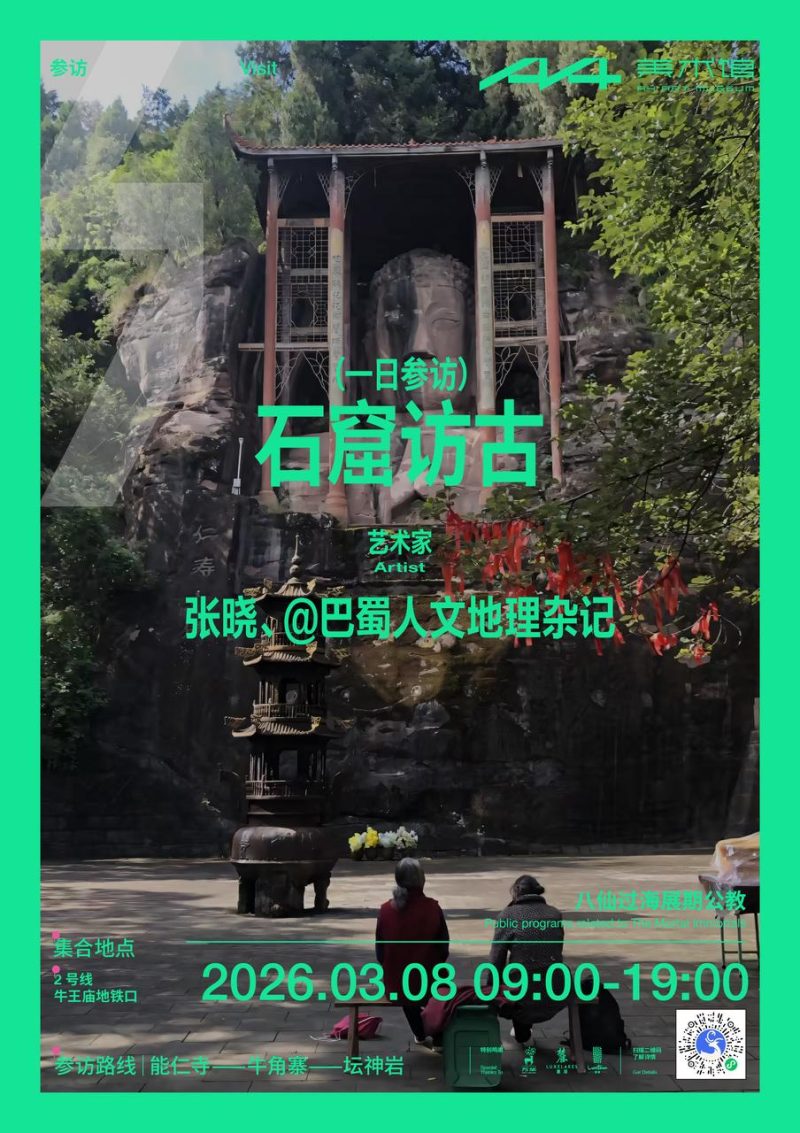
Between the rocks and the passage of time, grottoes are a form of carved history and a living site that is still unfolding.
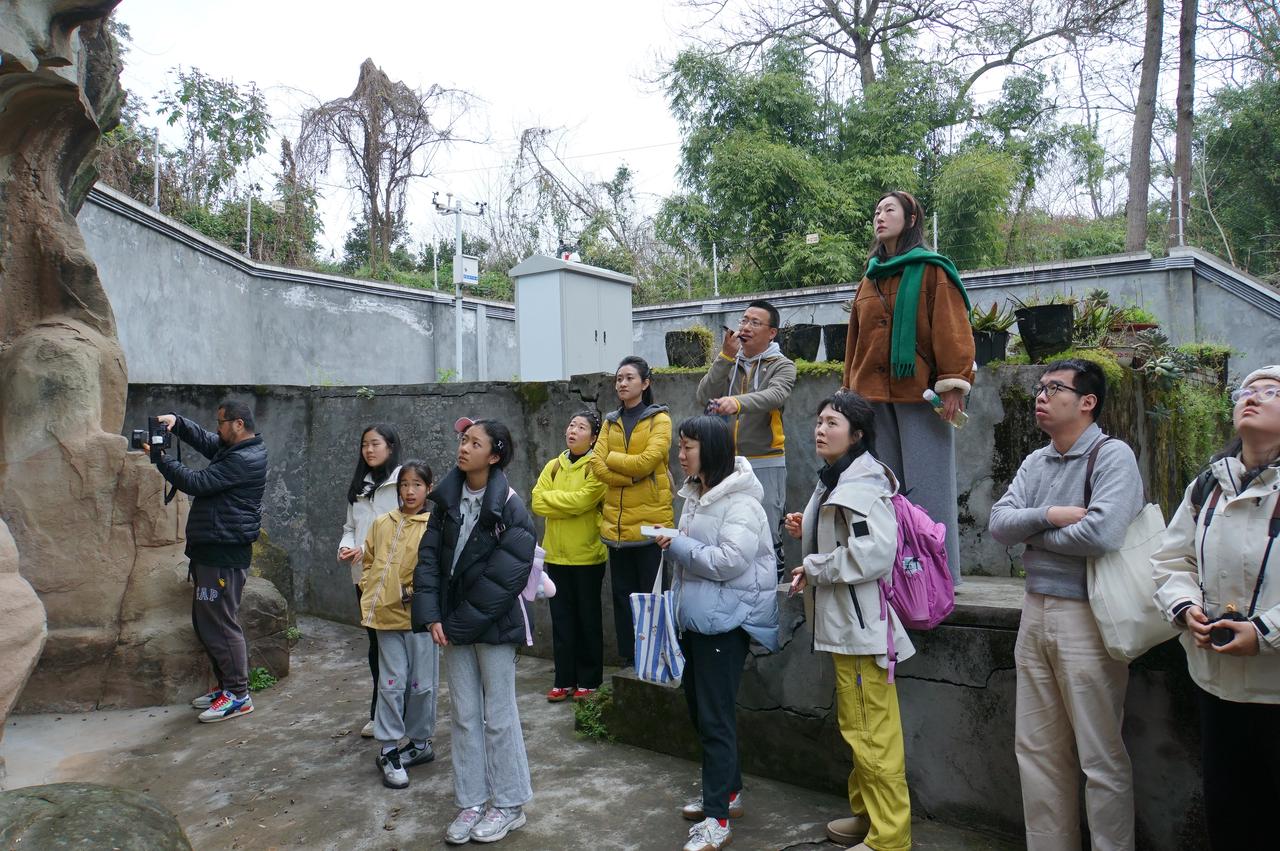
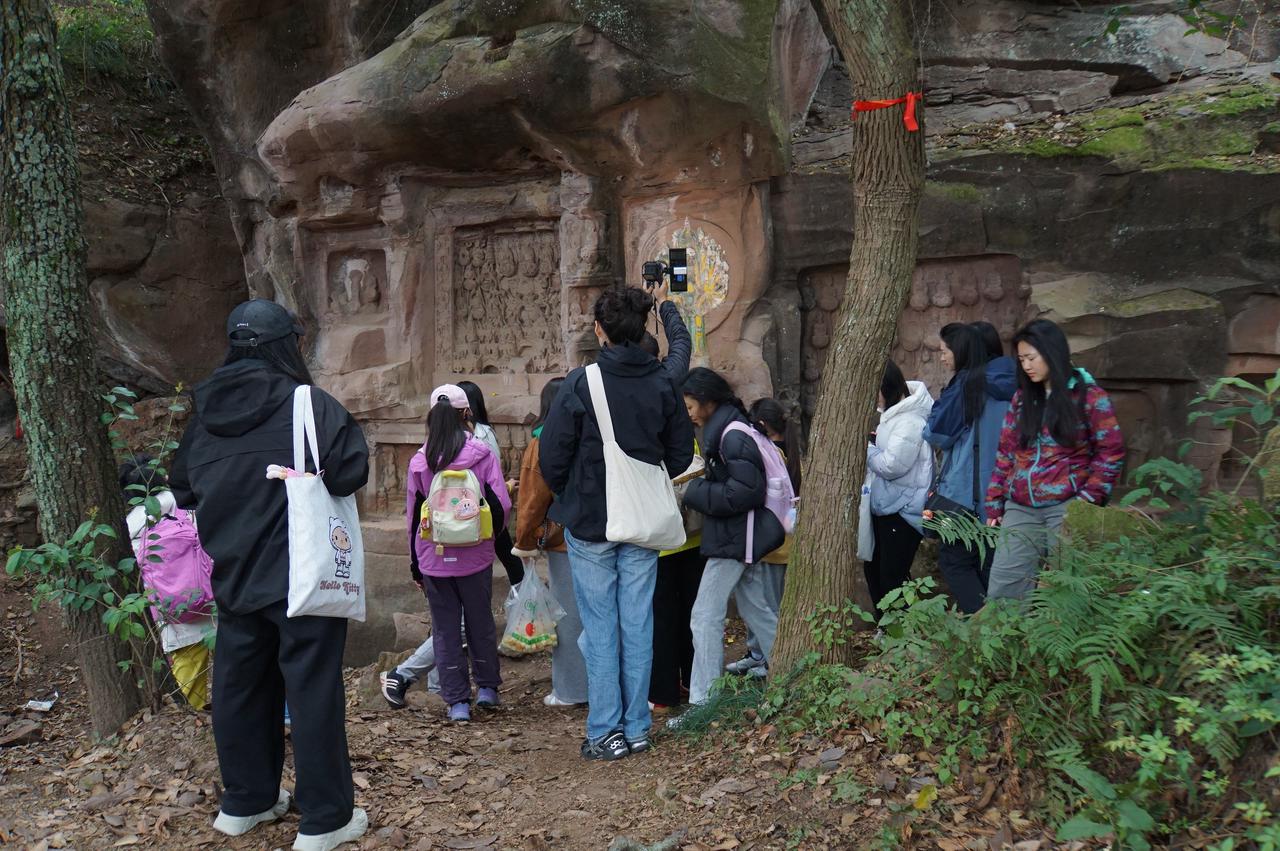
On this excursion, we will follow artist Zhang Xiao and @Notes on Bashu Cultural Geography to visit three significant grotto sites: the Nengren Temple Cliff Carvings, the Niujiaozhai Grottoes, and the Tanshenyan Cliff Carvings. Amidst the wild hills and rock faces, we will embark on a deep exploration of faith, iconography, and regional culture.
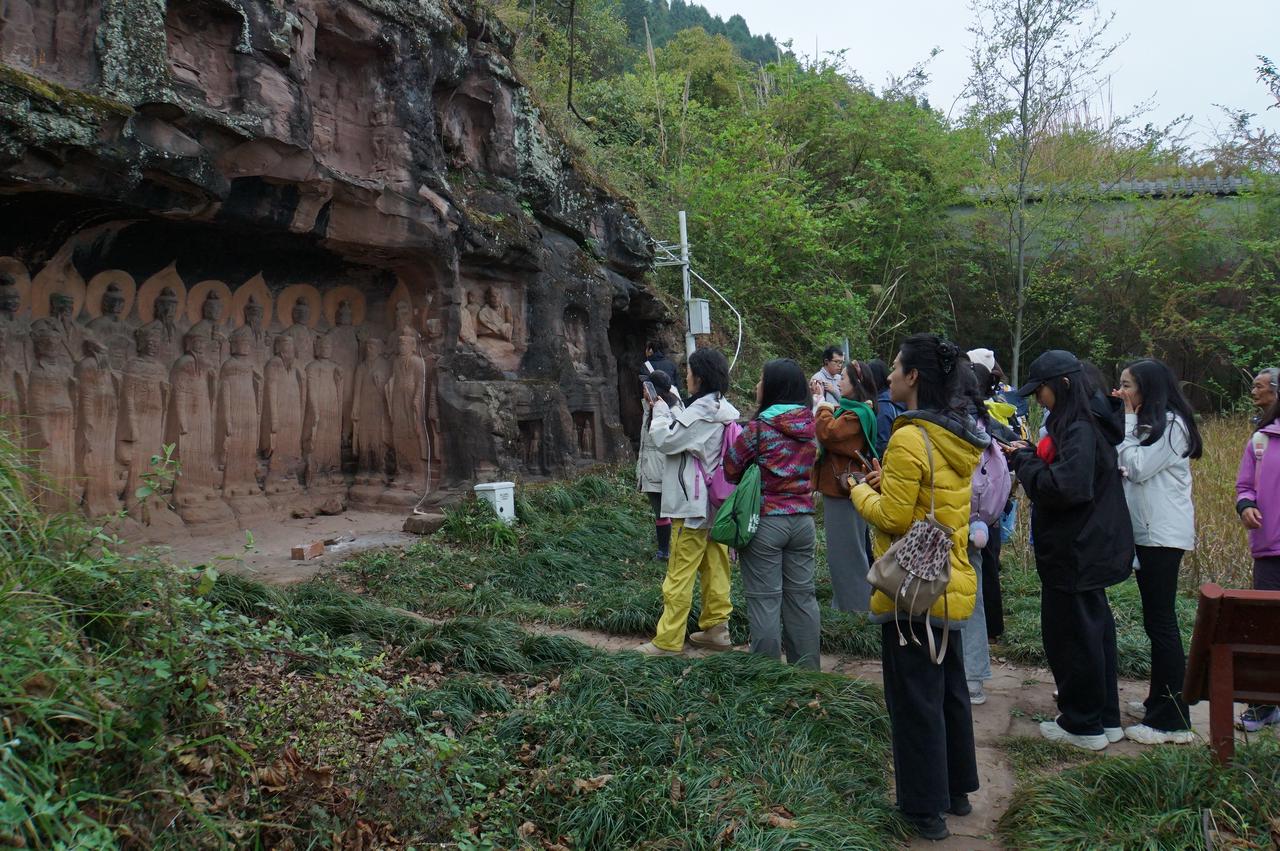
Nengren Temple Cliff Carvings: Carved in the late Tang Dynasty and flourishing during the Five Dynasties period, these are vital remnants of Buddhist stone carvings in western Sichuan. Its “Subduing Mara” cave features the largest single composition of its kind in China.
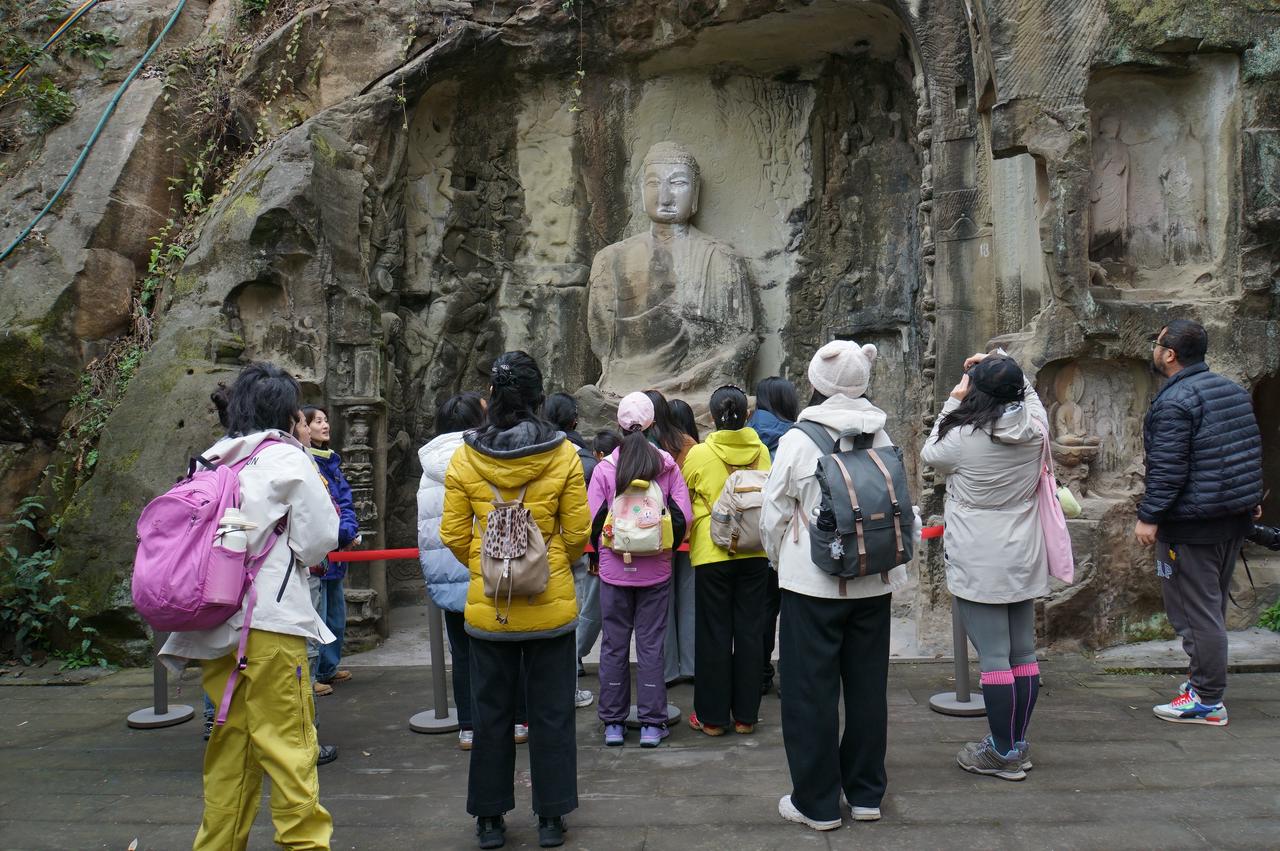
Niujiaozhai Grottoes: Commonly known as the Gaojia Great Buddha, this site centers on a 12.4-meter-tall bust of the Maitreya Buddha. With a serene countenance and massive proportions, the statue merges seamlessly with the mountain, serving as the iconic landmark of the Niujiaozhai Grottoes.
Tanshenyan Cliff Carvings: Renowned for their Tang Dynasty Taoist iconography, the site is most famous for Niche No. 64, the “Parallel Immortals Cave,” which contains 35 life-sized figures. Niche No. 53, the “Three Treasures Cave,” is considered the only known Tang Taoist niche dedicated primarily to the “Three Treasures,” with a clear inscription dating its creation to the eighth year of the Tianbao era (749 AD).
Among these ruins, we will also witness a contemporary folk practice known as “Wearing New Clothes.”
In certain rural contexts, locals repaint or regild the stone Buddha statues, “adding color” or “restoring the features” of icons weathered by centuries of erosion. On one hand, this act continues the daily offerings and emotional connection between believers and the divine, revitalizing the “sacred presence” of the statues. On the other hand, it sparks ongoing debates regarding heritage conservation, historical authenticity, and aesthetic judgment.
This spring, amidst the rock walls and the play of light and shadow, let us rediscover the spiritual power and human warmth embedded within these stone carvings.
*Zhang Xiao The Mortal Immortals – Exhibition Public Education Program